Cannabis seeds













 Alchimia now available in the USA!
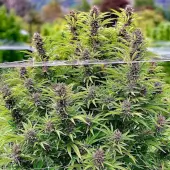
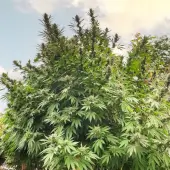
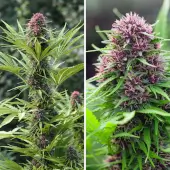
Information on Frisian Dew
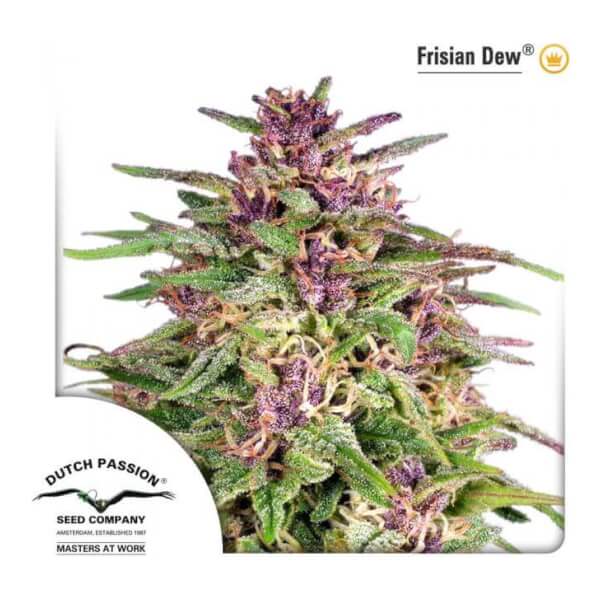
Frisian Dew is a feminized photoperiod strain from Dutch Passion, built for outdoor gardens and greenhouses in cool, damp climates. Its balanced 50/50 indica/sativa genotype comes with a fresh, fruity and floral bouquet, THC levels usually listed around 17%, and a hybrid effect that starts uplifting and settles into a calm body stone.
A purple outdoor strain born in Friesland
Frisian Dew owes its name to Friesland, one of the northernmost provinces of the Netherlands, where Dutch Passion selected it outdoors through grey, windy and wet summers. "Frisian" is the English rendering of "Fries", the regional language spoken there, a nod to the strain's local roots. The breeding goal was never Mediterranean perfection but reliable harvests in tough northern weather.
Released in 2008, it took 1st place at the Highlife Cup in its debut year, and ten years later it placed 3rd in the Dutch Hash category of the 2018 Homegrown Cup. Since then it has remained the reference outdoor seed in the Dutch Passion catalog, grown across Northern Europe as well as in Canada and the northern United States.
When Dutch Passion first evaluated this Super Skunk x Purple Star hybrid after three years of clone selection, the breeders noted that none of the many Skunk/Purple crosses they had made over the previous twenty years came close to it. Two decades of outdoor harvests later, growers keep coming back to it season after season. Frisian Dew has also become a parent in its own right. Dutch Passion used it for Frisian Duck and for AutoFrisian Dew, which took 3rd place among automatics at the 2014 Highlife Cup, while Seed Stockers worked its green phenotype in the Pyrenees to create Frizzy Kush.
Frisian Dew genetics and plant structure
Frisian Dew comes from a Super Skunk female crossed with a Purple Star male, a pairing that produced a stable hybrid with roughly 50% indica and 50% sativa genetics. The sativa side is credited with the long flower clusters and the indica side with the compact, dense buds, and together they give the plant a marked hybrid vigor.
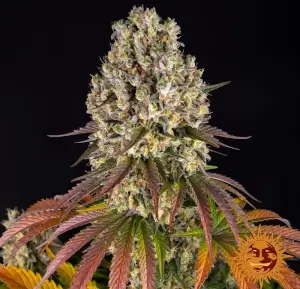
Plants grow fast with sturdy stems, large leaves and abundant side branching, and most phenotypes show a favorable flower to leaf ratio. Around half of the plants develop purple hues in the tops as autumn nights cool, while others stay fully green and a few turn completely purple. Dutch Passion points to the light purple phenotype as one of its own favorites for flavor.
Super Skunk
Super Skunk is a Sensi Seeds creation from Amsterdam, obtained by crossing the original Skunk #1 with Afghani indica lines over several years of work. Released in its final form in 1990, it won at that year's Cannabis Cup and became a pillar of the Dutch skunk era. In Frisian Dew it brings the earthy, herbal skunk notes that show up in some phenotypes.
Purple Star
Purple Star is an indica from Dutch Passion's own gene bank, known for its purple coloration and a short flowering period of about 46 days. Growers describe it as a generous producer with a calming effect, and other breeders have used it in crosses such as BC Purple Star. In Frisian Dew it is the source of the purple tones that appear in many plants.
Growing Frisian Dew outdoors and in the greenhouse
Frisian Dew is designed for outdoor and greenhouse growing, and the breeder does not recommend it for indoor rooms. Flowering takes about 8 weeks, and in Northern Europe the harvest usually falls in early to mid October, sometimes a few weeks earlier under glass.
In open ground and with good care, plants can reach 3 to 4 meters in height and almost as much in width. In good conditions yields can reach 1 to 2 kg or more per plant, more typical gardens bring in 500 to 1000 g, and even first-time growers can expect several hundred grams. Heavy branches may need stakes or netting once the buds fill out.
Its main asset is excellent mold resistance in humid, cool weather, combined with tolerance to temperature swings and to over or under feeding. The usual schedule is to germinate indoors in March or April, give 3 to 6 weeks of pre-growth under 18/6, and transplant outside around mid-May after the last frosts. Flowering starts in August and the plants finish in October.
This is an easy strain for beginners that also responds well to LST, supercropping, topping and fimming, techniques that keep height in check and open up the canopy. For the best flavor, organic cultivation is the recommended route, and removing dead leaves during mid and late flowering helps, since dense buds can trap moisture. Good spacing and airflow complete the picture.
Flavor, aroma and effect of Frisian Dew
The terpene profile is fresh, fruity and floral, moving between forest fruits with a light lemon touch in some plants and more pine and lavender notes in others. Certain phenotypes lean toward earth, herbs and a slightly ammonia-like edge inherited from the Skunk side. Citrus, spice and grapefruit tones also come through once the buds are cured.
The effect is a clear hybrid: a small dose brings an energetic, creative head high, while a larger one gives way to a heavy body stone and possible couch-lock. Harvesting a little earlier favors the uplifting side, while waiting for more amber trichomes reinforces the physical relaxation. Many outdoor growers find it suitable for both daytime and evening use.
Specifications on Frisian Dew
| Feminized Seeds | |
| Seed bank | Dutch Passion |
| THC Content | Medium (1-15%) |
| Indica/Sativa Genotype | Indica/Sativa at 50% |
| Flavor | Fruity, Citrus, Skunk, Earthy |
| Easy to grow | |
| Suitable for extractions | |
| Moisture/Mold Resistant | |
| Effect | Hybrid |
| Outdoor harvest | Standard (Autumn) |
| Indoor flowering | Fast (-9 weeks) |
| Indoor yield | High (500-600 g/m2) |
| Outdoor yield | High (400-1000 g/plant) |
| Genetics | Super Skunk, Purple Star |
Questions and answers
Frisian Dew related products (Dutch Passion)