
 Cannabis seeds













 Alchimia now available in the USA!
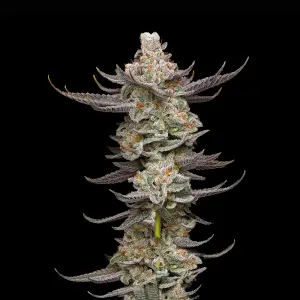
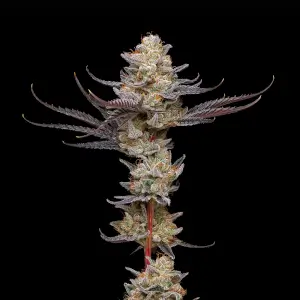
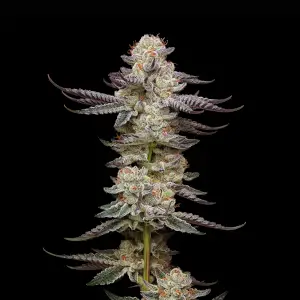
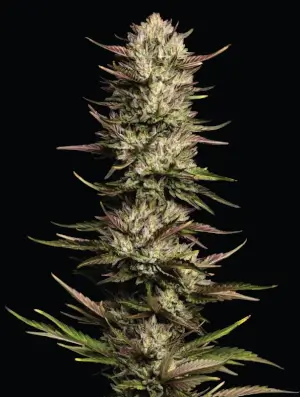
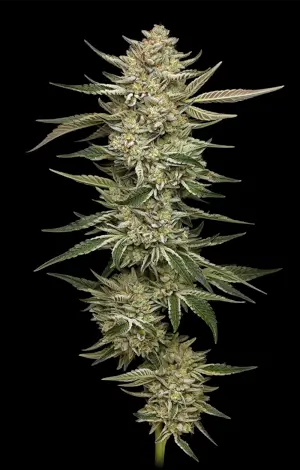
The most practical consequence is near-total sterility. According to North Carolina State University's agricultural extension, a triploid plant can be covered in pollen without setting seed, although finding the odd seed isn't unheard of. It's the same thing that happens with seedless watermelons, where a stray seed occasionally turns up.
How triploid seeds are made
The process has two steps. First, breeders create a tetraploid plant using a natural compound derived from the bulb of the autumn crocus (Colchicum autumnale), and then they cross it with a diploid plant. Each triploid seed is therefore an F1 hybrid between a tetraploid parent and a diploid one, which is why several breeders include "F1" in their strain names.
A common question is whether this is genetically modified cannabis. It isn't: no DNA from another species is introduced, and the plant's own genetic code stays intact. The only thing that changes is the number of copies of the chromosomes the plant already had.
The breeders behind triploid genetics
Humboldt Seed Company, founded in 2001 in Northern California, was the first to bring high-THC triploid seeds to the US market. In January 2024 it released OG Kush Triploid and Donutz Triploid after years of field trials on licensed farms.
Benjamin Lind, co-founder and chief science officer of Humboldt Seed Company, has said it all started more than five years before the launch. During a pheno hunt in Grass Valley, California, the team found a triploid that had occurred naturally. From there, they worked with Richard Philbrook, a molecular biologist at Dark Heart Labs.
Maverick Genetics has built its own triploid line around popular dessert and candy cultivars, which it labels as 3x versions. The breeder presents them as functionally seedless under heavy pollen pressure, with an earlier finish, denser trichome coverage and more uniform growth than comparable diploid lines. Its triploid range includes Jealousy Triplod, Gruntz and Black Cherry Gelato.
Benefits attributed to triploid genetics
The underlying reason for all this is unwanted pollen. Hemp pollen is carried by the wind and has been documented traveling at least three miles. In Oregon there were even lawsuits between neighbors after all-female flower crops were pollinated by nearby grain or fiber hemp fields, so a plant that barely sets seed protects the outdoor harvest.
Breeders also attribute other improvements to their triploids. Humboldt reports a 3-5% increase in THC, 10-20% more flower, 10-15% more fresh frozen live rosin yield and a flowering period 5 to 10 days shorter. These figures are best read as breeder data, obtained in each company's own field trials.
Horticulture expert Ed Rosenthal compared triploid and diploid plants at Humboldt's 2023 pheno hunt. He said the triploids looked more vigorous, with bigger buds and higher trichome density.
What independent trials show
University research has focused on Oregon CBD's CBD and CBG hemp, and the results are more cautious. In 2021 and 2022 trials in Kentucky, New York and North Carolina, the triploid versions of Lifter and White CBG produced 87% and 77% fewer seeds than their diploid counterparts when pollen was present. The triploids grew taller and wider, but in pollen-free fields there were no appreciable differences in biomass or cannabinoids.
The authors conclude that triploidy doesn't make the plant completely pollen-insensitive, but it does reduce seed production and improve yield and quality when pollen is around. Cornell researchers also found that triploids still set some viable seed. In a greenhouse study, the triploid version of the variety 'Wife' had 99.5% fewer filled seeds than the diploid.
Growing tips and limits to keep in mind
In practice, a triploid is grown like any feminized plant. Still, triploids grew taller and wider in the trials, so it's worth giving them more room outdoors.
There are drawbacks too. The seeds cost more because they're harder to produce, the range of strains is still small and there are only a few years of large-scale experience.
One last limit matters to anyone who breeds at home. Triploids have been compared to the mule: they're a genetic dead end, and diploids will always be needed to produce them. When they are crossed, they give mixoploid offspring that usually aren't worth keeping, which makes them a poor base for making your own seeds.
Who they make sense for
Triploid seeds fit best in outdoor or greenhouse grows near industrial hemp, gardens with male plants nearby, or spaces where hermaphrodites have already shown up. In those settings, their lower sensitivity to pollen is a real advantage over conventional genetics. In well-controlled indoor grows, the difference comes down more to each strain's profile than to ploidy.
The best way to judge them is to compare. Growing a triploid such as OG Triploid, Gruntz or Tropicana Cherry next to a diploid version from the same family is the most direct way to see what triploidy adds to your own garden.