Cannabis seeds













 Alchimia now available in the USA!
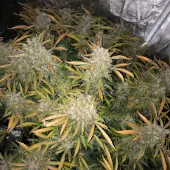
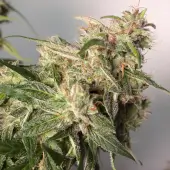
Information on Charlottes Angel CBD Auto
CBD Charlotte's Angel Auto by Dutch Passion is the autoflowering, feminized version of the Dutch bank's first CBD-rich, low-THC strain. It is a sativa-dominant hybrid that typically reaches around 15% CBD while keeping THC below 1%. The nose is fruity and earthy with citrus, pine and floral touches, and the effect is relaxed and soothing, with a clear head and practically no high.
The story behind CBD Charlotte's Angel Auto
This strain grew out of the success of the photoperiod CBD Charlotte's Angel, which joined the Dutch Passion catalog in 2018 as the company's first strain with high CBD and almost no THC. Growers liked it so much that many began asking for an autoflowering version with the same cannabinoid profile, and the breeders set out to stabilize that high-CBD, low-THC chemistry in a faster, light-independent plant.
The work paid off quickly. Shortly after release, CBD Charlotte's Angel Auto took first prize in the CBD category at the 2019 Highlife Cup in the Netherlands, a remarkable start for a strain that had only just reached growers.
The award has a family flavor to it. Two years earlier, in 2017, its autoflowering parent CBD Auto Compassion Lime had already won first prize for CBD cannabis at the same Highlife Cup, so this strain kept the trophy in the family.
When the photoperiod mother was first introduced, the Dutch Passion test team summed up their experience in a few words: they simply did not get high. That low-THC character is exactly what the auto version was built to keep.
Genetics and plant structure
CBD Charlotte's Angel Auto is a cross of CBD Charlotte's Angel and CBD Auto Compassion Lime, combining a CBD-rich photoperiod with an autoflowering CBD line. The result is a sativa-dominant plant, often described as roughly 80% sativa, with a ruderalis background that makes it flower according to age rather than light hours.
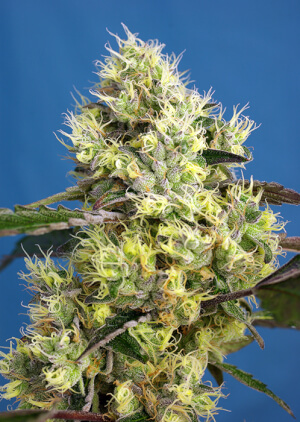
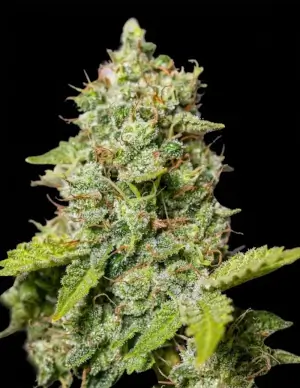
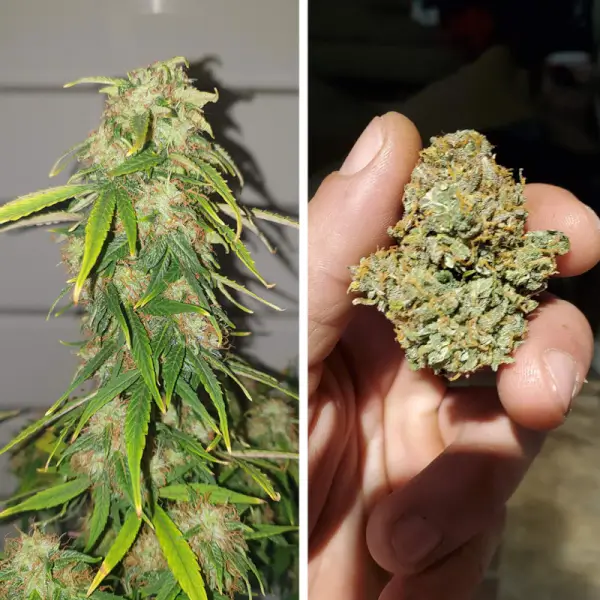
Plants show long branches and large, slender leaves with average internode spacing. Most develop the classic Dutch Passion auto shape, with a dominant main cola surrounded by plenty of side branches, and some phenotypes grow into a neat Christmas tree silhouette. Buds tend to be slightly open rather than rock hard, but they come heavily coated in sticky resin, and some plants show purple or reddish tones in leaves and calyxes, along with the occasional foxtail.
CBD Charlotte's Angel
The photoperiod parent is Dutch Passion's own creation, bred from Dutch Charlotte, a CBD-rich clone, and Red Angel, a clone-only CBD strain from Amsterdam. It is a feminized, mostly sativa plant with around 15% CBD and THC kept below 1%, and it brings herbal aromas with pine and diesel undertones to the cross.
CBD Auto Compassion Lime
The autoflowering parent combines the photoperiod CBD Compassion with Daiquiri Lime, itself a cross of Californian Orange and USA Sour Diesel. Unlike its offspring, it carries a balanced profile of roughly 9 to 10% CBD and 8 to 9% THC, with zesty citrus and lime flavors. Its contribution here is the autoflowering trait, the vigor and part of that fresh, sour fruit character.
Growing CBD Charlotte's Angel Auto
This is a robust, vigorous autoflower that is easy to grow, a good fit for beginners as well as experienced growers. It does not call for specialist feeding or complicated techniques, and it can take a beating without losing its stride. Some growers find it sensitive to heavy nutrient doses, so a light hand with feeding is a sensible approach.
Most plants are ready around 11 to 13 weeks from seed, with the bulk finishing at about 12 weeks, although figures vary between sources and some phenotypes finish closer to 10 weeks. Height is medium, usually around 100 cm (about 3.3 ft), with the odd plant stretching taller in a large container. Let the buds harden fully before harvest, since cutting early costs you yield.
Indoors and in greenhouses, a typical harvest is around 400 g/m² (about 1.3 oz/sq ft), and experienced growers running a sea of green setup can push it to 450 to 500 g/m². Individual plants with enough space generally give 50 to 100 g of dried buds. An airy medium such as a fabric pot or air pot, a powerful LED and organic nutrients help bring out the full terpene profile.
Outdoors it does best in sunny, dry conditions, yet it tolerates short spells of rain and cold. Because it is not tied to day length, you can plan two to three full cycles per season outdoors in most US climates, and three or even four in warm, Mediterranean-type regions. Good airflow is important, as it reduces the risk of mold and bud rot and strengthens branches carrying heavy flowers.
A few simple techniques make a clear difference. Defoliating at the end of the vegetative phase lets more light reach the lower bud sites, while removing weak lower branches focuses the plant on its main cola, ideal for sea of green. Several growers also report good results with low-stress training to open up the canopy.
Flavor and effect
The terpene profile is diverse and complex, with myrcene as the leading terpene. The aroma is fruity and earthy with citrus, floral, spicy and pine notes, and some colorful phenotypes lean toward forest fruit. Growers have also described hints of lime, mint and pine as the buds cure.
On the palate, the smoke is fresh, sour and fruity, close to CBD Auto Compassion Lime but a little less lemony and more earthy and piney. It is a smooth, rounded flavor that stays pleasant from the first draw to the last.
With THC kept below 1%, the effect is relaxing and soothing with little to no psychoactivity. Many users notice a gentle body effect that settles into a calm state of mind, while the head stays clear enough for focus and creativity. It suits growers who want CBD-rich flowers without a high, and it can also be blended with THC-rich buds to soften their effect.
Questions and answers
Charlottes Angel CBD Auto related products (Dutch Passion)