
 Cannabis seeds













 Alchimia now available in the USA!









The indica label isn't a guarantee
For decades, “relaxing” has been treated as shorthand for indica. Research tells a more complicated story. A 2021 study in Nature Plants analyzed nearly 300 samples and found that indica and sativa labels did not form distinct genetic groups, and that the overall chemistry of both labels largely overlapped.
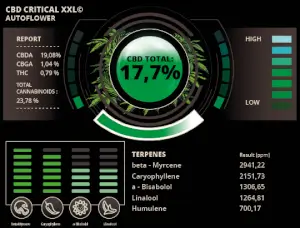
What the labels did track was a handful of terpenes. Of the 40 compounds measured, 12 correlated with the indica-sativa scale, and the strong, earthy smell associated with indica was tied to myrcene. The researchers suggested that growers and breeders had been assigning labels mainly based on aroma and purported effects rather than genetic ancestry.
A 2022 study in PLOS ONE reached a similar conclusion after analyzing close to 90,000 commercial samples from six US states. It identified three terpene-based groups, one of them dominated by myrcene and pinene, and found that grouping by dominant terpene predicted chemistry far better than the legacy labels.
One of the most striking findings in that 2022 dataset involved Blue Dream, usually sold as a sativa-leaning hybrid. Around 88.5% of its samples landed in the myrcene and pinene group, making its chemistry more predictable than its label suggested.
Afghan and Kush roots
Many strains described as relaxed trace back to the Hindu Kush, the mountain range that stretches across Afghanistan, Pakistan and Tajikistan. Its landraces are short, bushy plants with heavy resin production, traditionally grown to make hash, and they're behind Northern Lights, the Hash Plant lines and countless modern indicas.
The purple strains of Northern California share that heritage. Cuts of Purple Kush, a Hindu Kush and Afghan cross, were circulating in the mid-1990s. From Purple Kush came Mendo Purps and its phenotypes Purple Urkle and Lavender, which in turn led to Granddaddy Purple.
Some featured strains
Northern Lights
Northern Lights is widely seen as a benchmark indica. Built from pure Afghan genetics in the Pacific Northwest in the late 1970s, it dominated the Amsterdam coffeeshop scene in the late 1980s and 1990s. It stays compact and finishes in about 7 to 8 weeks indoors.
Granddaddy Purple
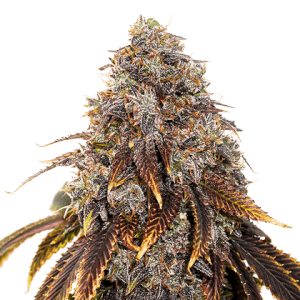
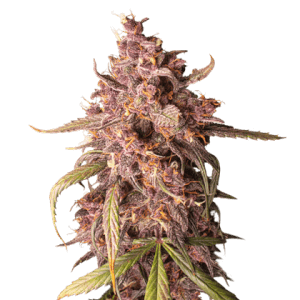
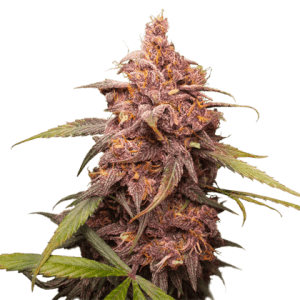
Popularized by Ken Estes in 2003, Granddaddy Purple (GDP) is usually described as a cross of Purple Urkle and Big Bud, although Leafly lists a different genealogy of Mendo Purps, Skunk and Afghan. It inherits a complex grape and berry aroma from Purple Urkle and an oversized, compact bud structure from Big Bud.
Ken Estes told Leafly how the strain got its name. When he first tried it, he thought it was like the grandpa of all weed, then caught himself and decided it was more like the granddaddy.
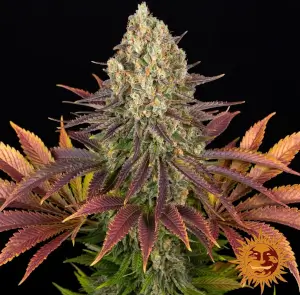
GDP won Best US Indica at the 2015 High Times Cannabis Cup in Denver. Its most commonly reported flavors are grape and berry, which fit its deep purple coloration.
Hindu Kush
Named after the region it comes from, Hindu Kush is a landrace indica with earthy notes of pine and skunk. It's known for producing solid quantities of hash, a reminder of the role these plants have played in traditional hash-making regions.
Bubba Kush
Bubba Kush is a short, compact plant usually associated with earthy and coffee-like flavors. It's commonly described as an OG Kush cross with an indica of uncertain origin, and it flowers in about 8 to 9 weeks.
Hash Burger
Among recent strains, Hash Burger, Leafly's 2025 Strain of the Year, stands out with its savory profile of garlic, pepper and diesel. Some reviewers describe it as a relaxing evening strain, though Leafly flags it as unsuitable for newcomers or people with low tolerance because of its high potency.
Growing tips
Strains in this group tend to share Afghan traits: compact structure, broad leaves and dense buds that finish relatively quickly. That makes them a good fit for indoor spaces, but dense colas also need good airflow. With GDP, for example, growers are advised to watch for botrytis in the central colas.
If you're growing purple strains like GDP, slightly cooler nights toward the end of flowering help bring out the color. And because aroma is one of the best clues to a strain's chemistry, a careful dry and cure is worth the extra attention.
A note on expectations
No strain produces the same experience for everyone. Two plants sold under the same name can even differ genetically: the 2021 study found that samples with the same strain name were sometimes more different than samples with different names. Looking at lab results and terpene profiles, when available, is a more reliable guide than the name or the indica label alone.
If you're new to a strain, start with a small amount and see how it feels. User reports are a helpful starting point, but your own experience is what will tell you whether a strain feels relaxed to you.
Who they make sense for
Strains described as relaxed suit growers who enjoy earthy, hashy and grape profiles and the compact, resinous structure of Afghan and Kush genetics. They're also a natural choice for indoor growers who want plants that stay manageable and finish on time.
If you're drawn to classic genetics, Northern Lights and Hindu Kush connect directly to the landraces. If you prefer color and fruit, Granddaddy Purple offers the purple heritage of Northern California, while Hash Burger shows how the category keeps evolving with new aromas.