Cannabis seeds













 Alchimia now available in the USA!
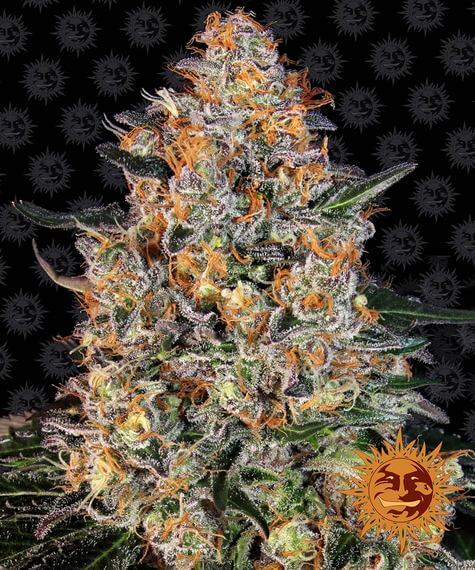
Information on Bubba Kush
Bubba Kush by Barney's Farm is a feminized, indica-dominant strain built on a cross of Afghan Kush Landrace and OG Kush, with a genetic split of roughly 70% indica and 30% sativa. Its buds release a sweet and earthy bouquet laced with fuel, spice and soft cocoa-like undertones. THC is reported anywhere from around 20% up to 29%, and the effect opens with a light euphoric lift before settling into a deep, relaxing calm.
The story behind Bubba Kush
The Bubba Kush legend begins in Los Angeles in 1996, when grower Matt Berger, nicknamed "Bubba Kush," told his friend Josh Del Rosso that the weed in Florida beat anything in LA. To prove it, Berger brought cuttings back from Florida, and the single OG Kush clone that survived the trip became the original clone-only OG Kush of Southern California. Matt and Josh later crossed that OG with another Florida import called "Bubba," and a handful of seeds from that cross started the story of Kush Bubba, later known as Bubba Kush.
Some of those first seeds reached Kenji Fujishima, a grower friend of Cypress Hill's B-Real, who was hunting phenotypes in B-Real's bathroom. The plant they found there was so distinctive that it inspired the Cypress Hill track "Dr. Greenthumb" in 1998, and by 1997 people were already buying it from them.
The connection between this strain and Barney's Farm runs deeper than the seed packet. In 2025, Barney's Farm and B-Real's Dr. Greenthumbs brand launched Insane OG, a cultivar that blends OG Kush, Bubba Kush and Granddaddy Purple, presented at Mary Jane Berlin. Barney's own Bubba Kush feminized is the Amsterdam bank's interpretation of the classic, rebuilt from Afghan landrace stock and OG Kush to capture the profile that made the original famous.
Genetics and plant structure
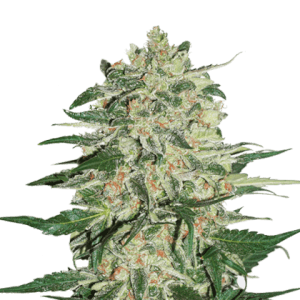
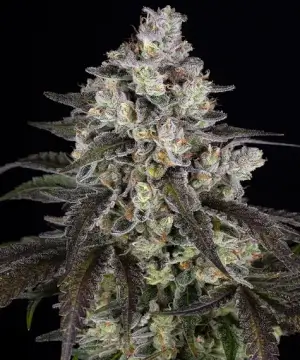
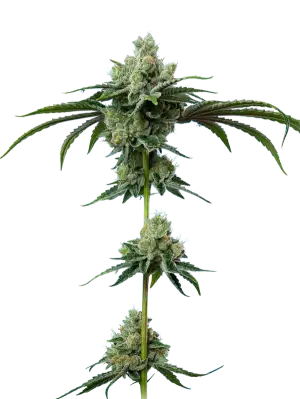
With its 70/30 indica-dominant ratio, Bubba Kush grows like a classic Kush: stocky, compact and not prone to taking over the grow space. Growers describe broad, heavy fan leaves that can shade the lower nodes, so a little defoliation or training goes a long way. The buds come in dense and resinous, and some growers report phenotypes ranging from deep green to fully purple flowers.
Cannabis historians believe the original Bubba parent leaned closer to Afghan Hindu Kush landrace genetics than OG Kush did. That helps explain the logic of Barney's pairing: an Afghan landrace brings the hashish structure and resin, while OG Kush adds the fuel character and potency the Kush family is known for.
Afghan Kush Landrace
Afghan Kush is a landrace from the Hindu Kush mountain range between Afghanistan and Pakistan, a region long considered the homeland of fine hashish. Local farmers grew and processed these plants for generations, selecting short, sturdy, resin-heavy indicas adapted to dry alpine conditions. Seeds from the Hindu Kush reached the United States in the mid-to-late 1970s, and their earthy, dank aromas set them apart from the herbal and fruity sinsemilla that smokers knew at the time.
Those traits made Afghan genetics the backbone of the indoor revolution. Their short stature and fast, dense flowering solved the problems that tall tropical strains created under lights, and almost every member of the Kush family carries some of this landrace ancestry.
OG Kush
OG Kush traces back to clandestine growers in Florida before reaching Los Angeles as a single surviving clone in 1996. Some cannabis writers have suggested Chemdog as a likely ancestor of both OG Kush and Sour Diesel, which fits its unmistakable fuel-like nose. It went on to become the foundation of a huge family of West Coast hybrids.
In its early LA days, OG Kush was so scarce that an eighth reportedly went for around 100 dollars, and even well-connected growers could only get it every couple of months.
Growing Bubba Kush
Indoors, Bubba Kush reaches around 100 to 120 cm and needs about 8 to 9 weeks of flowering, roughly 56 to 63 days. Under good conditions it delivers 550 to 600 g/m², an excellent return for such a manageable plant. Its compact frame makes it a comfortable fit for tents and small rooms.
Outdoors, plants typically stretch to between 1.7 and 2.5 meters, depending on climate and pot size. Harvest arrives in the first half of October in the Northern Hemisphere, with yields of up to 1 kg per plant. The strain is described as robust and adaptable to a range of climates, which makes it a reliable choice for outdoor gardens.
This is an easy strain to grow that asks for little beyond occasional pruning, so it suits newcomers as well as experienced growers. Topping and a SCROG net work well to even out the canopy, and some growers note that she prefers a moderate feeding schedule rather than heavy nutrients. The abundant resin also makes her an interesting candidate for extractions.
Flavor, aroma and effect
Once dried and cured, the buds release a sweet and earthy aroma backed by diesel and spicy notes. On the palate, rich earthy tones meet a sugary sweetness, with hints that many smokers compare to cocoa and coffee. The terpene profile reported for this cut is led by ocimene and myrcene.
The experience starts with a gentle euphoric buzz that lifts the mood without rushing. As it develops, the effect turns into a relaxing body calm that makes it an evening strain for kicking back, whether smoked or vaped. Barney's Farm sums it up as a magic carpet ride, a fitting image for a strain that has stayed relevant for three decades.
Specifications on Bubba Kush
| Feminized Seeds | |
| Seed bank | Barneys Farm |
| THC Content | Very high (25-30%) |
| Indica/Sativa Genotype | Indica +60% |
| Flavor | Woody, Earthy |
| Easy to grow | |
| Fast Flowering | |
| Suitable for extractions | |
| Effect | Relaxing |
| Outdoor harvest | Standard (Autumn) |
| Indoor flowering | Fast (-9 weeks) |
| Indoor yield | Very high (+600 g/m2) |
| Outdoor yield | Very high (+1000 g/plant) |
| Genetics | Afghan, OG Kush |
Questions and answers
Bubba Kush related products (Barneys Farm)