
 Cannabis seeds













 Alchimia now available in the USA!






Where it all began is still debated. A 2021 genomic study published in Science Advances analyzed 110 genomes and concluded that cannabis was first domesticated about 12,000 years ago in East Asia. Some researchers have questioned that conclusion, noting that many of the samples came from regions usually considered Central Asia.
Central and South Asia
Afghanistan and Pakistan
The mountains of the Hindu Kush, stretching across Afghanistan, Pakistan and Tajikistan, are home to the landraces that defined the indica type. They're short, bushy plants with heavy resin production, traditionally grown to make hash. Well-known examples include Hindu Kush, Afghani, Mazar-i-Sharif, Lashkar Gah and Pakistani Chitral Kush.
Their impact on modern breeding is hard to overstate. Afghan genetics are behind Northern Lights, the Hash Plant lines and countless modern indicas, and they were the source of the short flowering time and dense structure that made indoor growing practical.
India and Nepal
Further south and east, the Indian subcontinent holds a wide range of landraces, from Himalayan plants in Nepal and northern India to tropical sativas in the south. A female from Kerala, for example, is one of the parents of White Widow, according to its breeder. These lines tend to be taller and slower than their Afghan neighbors.
Southeast Asia
Thailand, Laos and neighboring countries produced some of the most sought-after tropical sativas. Laos in particular has a long history of breeding, growing and producing cannabis, and much of the landrace cannabis in Thailand itself has been grown by Laotian farmers. These are tall plants with long, thin leaves and long flowering periods.
Thai cannabis became famous in the US during the Vietnam War. American soldiers on leave in Thailand discovered “Thai sticks”: cured buds packed around a bamboo stick, wrapped in fan leaves and tied with hemp string. Demand grew so much that Thailand became one of the world's largest illegal cannabis exporters through most of the 1970s and early 1980s.
Thai genetics also left a mark on US breeding. Chocolate Thai first showed up in the US in the 1960s, and it was one of the parents DJ Short used to develop Blueberry. Thai lines are also believed to have contributed to the original Haze. From Indonesia, the Aceh (or Atjeh) landrace is another name collectors know well.
Sub-Saharan Africa
South Africa: Durban Poison
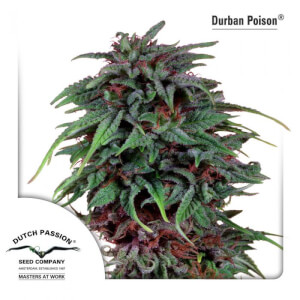
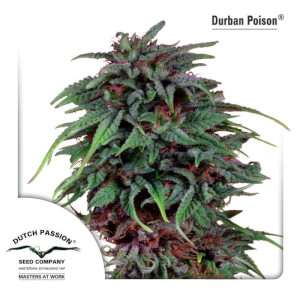
Durban Poison, from the port city of Durban, is one of the few landraces that made it into modern seed catalogs. It's known for a sweet, anise-like aroma and a relatively short flowering time for a sativa. It later became one of the parents of Girl Scout Cookies.
Malawi and East Africa
Malawi Gold, known locally as chamba, is famous for its tall plants and very long flowering times. In Malawi, buds are traditionally cured tightly bound in banana or maize leaves, forming what are known as cobs. The variety became so important that it's listed among the country's “three Big C's” of exports, alongside fish and tea.
When Bob Marley visited Zimbabwe for its independence concert in 1980, he smoked Malawi Gold in Harare with his art director, Neville Garrick. It was wrapped in a banana leaf and, according to accounts, it made a lasting impression on him.
The region holds many other landraces, including Swazi Gold, Red Congolese, Kilimanjaro and Rooibaard. On the island of Réunion, in the Indian Ocean, the local varieties are known as Zamal.
North Africa: Morocco
Morocco's Rif mountains have long been known for their hash, made from the local landrace, called kif or beldia. Over the past two decades, however, this landrace has been largely replaced by imported hybrids, mostly sourced from Spain and the Netherlands, which yield far more resin.
In 2019, a 27-year-old farmer from Ketama named Hicham told AFP he had switched to growing the hybrid Critical because the imported seeds gave a much higher yield. Even so, he said he only smoked beldia and considered the modern varieties mediocre. At the time, beldia hash sold for up to four times the price of Critical.
The difference goes beyond yield. Beldia is planted in winter and grows on rainfall alone, while hybrids like Critical are grown in the dry summer and need heavy irrigation. Researcher Pierre-Arnaud Chouvy argues that preserving the kif means preserving the Rif itself, since only the landrace is adapted to its harsh conditions. A genetic study also found that beldia holds much more diversity than the imported Critical.
The Caribbean: Jamaica
Lamb's Bread, also known as Lamb's Breath, is Jamaica's best-known landrace and is closely tied to Rastafari culture. It's described as coming from northern Jamaica, an area of tropical humidity, red clay soil and high elevation. Another Jamaican name collectors look for is King's Bread.
Latin America
Mexico
Acapulco Gold, from the Guerrero region, became the benchmark for premium cannabis in the late 1960s. It's known for its golden-hued buds and was one of the genetics behind early hybrids like Skunk #1. Other Mexican landraces, such as Oaxacan lines, also played a role: Highland Oaxaca Gold was one of Blueberry's ancestors.
Colombia and Panama
Colombian Gold, from the Santa Marta mountains, was the base of many Haze hybrids. Together with Acapulco Gold and Afghan genetics, it was part of the mix behind Skunk #1. Colombia is also home to Punto Rojo, a landrace with distinctive red pistils, and Limón Verde.
From Panama comes Panama Red, a sativa from the 1960s and 1970s that is now hard to find in its pure state. Like other tropical landraces, it needs a long season to finish.
Hawaii and the Pacific
Hawaii developed its own island lines, many of them adapted to its tropical latitude. Names like Hawaiian Duckfoot, Puna Buddaz and Moloka'i Purpz are part of the collector's vocabulary. Hawaiian genetics also appear in the background of classic US hybrids, including some Diesel lines.
Growing landraces
Every landrace is adapted to its place of origin, so the first thing to consider is latitude. Afghan and Hindu Kush plants finish early and stay compact, which suits short seasons and indoor grows. Equatorial sativas from Thailand, Malawi or Colombia, on the other hand, can have very long flowering times and grow tall, so they usually need a greenhouse or a long, warm fall.
Since most landraces are sold as regular seeds and carry a lot of variation, it's worth germinating a good number to see the full range of the population. If you want to preserve a line, work with several males and females rather than a single pair, so you keep as much of its diversity as possible.
Who they make sense for
Landrace seeds suit growers interested in cannabis history, breeders looking for traits that have become rare in modern hybrids, and anyone who wants aromas and structures that stand apart from today's dispensary menus.
They also play a role in conservation. As the case of Morocco shows, many local populations are being replaced by imported hybrids. Growing and preserving landraces helps keep that genetic heritage alive for future breeders.