Cannabis seeds













 Alchimia now available in the USA!
Information on Laughing Buddha
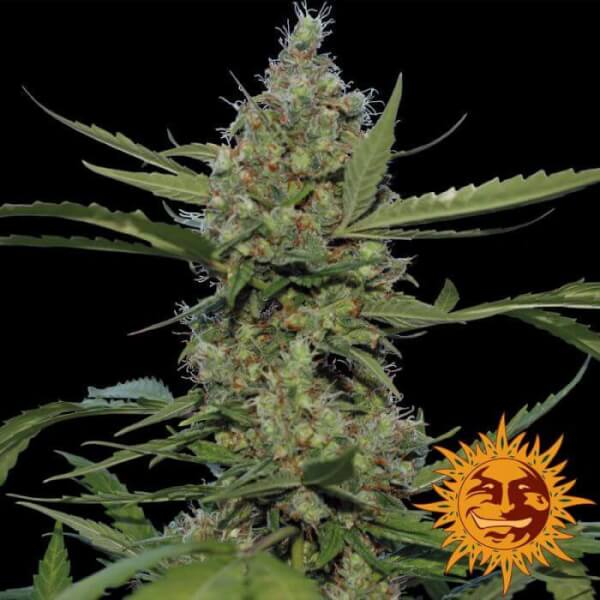
Laughing Buddha is a feminized photoperiod strain from Barney's Farm that blends a landrace Thai sativa with a Jamaican hybrid. The result is a sativa-dominant plant of roughly 70 to 80% sativa, with THC reported between 18 and 24% and a sweet, exotic fruit aroma laced with spice. Its effect is bright and talkative, a giggly, energetic, euphoric high that lives up to the name.
A cup winner with a smiling name
Laughing Buddha has been part of the Barney's Farm catalog for over two decades, and it earned its reputation early. In 2003 it took third place at the High Times Cannabis Cup in Amsterdam, a result that put the strain on the map for sativa lovers. The company behind it grew out of Barney's Coffeeshop on Haarlemmerstraat, opened in 1986 by a traveler known as Derry after years spent with village growers in northern India.
The name points to the effect rather than to a specific religious figure. Growers and smokers keep coming back to the same words, giggly, happy and sociable, and many say it really lives up to its name once the first laughs hit.
The smiling, round-bellied figure most people picture as the "Laughing Buddha" is actually Budai, a wandering Zen monk of 10th-century China who carried a cloth sack and is not the historical Buddha at all. Popular belief holds that rubbing his belly brings good luck and prosperity, a fitting mascot for a strain known for putting smiles on faces.
Genetics and plant structure
Barney's Farm built this strain by crossing its own landrace Thai sativa with a Jamaican hybrid, two lines with deep roots in tropical cannabis culture. The breeder now rates it at 20% indica and 80% sativa, while other figures place it closer to 70/30, so expect a plant that behaves very much like a tropical sativa.
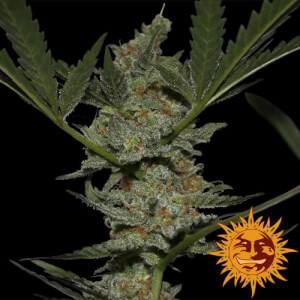
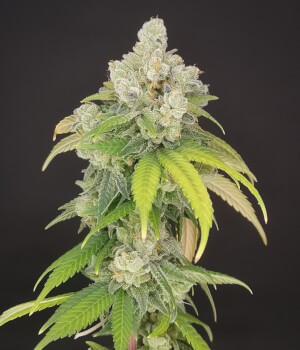
Structurally, Laughing Buddha is a fast-growing plant that keeps stretching well into flowering. It forms long, thick main colas that grow large, tight and heavy, and the top branches often need pruning, bending or staking to keep the canopy under control.
Thai landrace sativa
The Thai side brings the tall, lanky frame and the clear, energetic high associated with Southeast Asian sativas. Thai cannabis from the northeastern Isan region became famous in the West through Thai stick, buds bound around a stick or hemp stalk, sometimes coated in hash oil and wrapped in fan leaves before curing.
American GIs stationed in or visiting Thailand during the Vietnam War helped spread the fame of Thai stick back home. By the early 1970s, a kilo that cost around $3 in Isan could fetch roughly $4,000 in US cities, until eradication campaigns in the late 1970s wiped out most of the crop.
Jamaican hybrid
The Jamaican parent links Laughing Buddha to an island where cannabis has a long cultural history. Ganja arrived in Jamaica around 1845 with indentured workers from India brought to the sugar plantations, and the word itself comes from the Hindi gāñjā, the name for cannabis flowers.
Over the following century, the plant became woven into Rastafari culture and reggae music, from Bob Marley to Peter Tosh's 1976 anthem "Legalize It", which openly defended the plant.
Growing Laughing Buddha
Indoors, Laughing Buddha is a sativa that needs a bit of patience. The breeder lists a flowering time of 70 to 75 days, while many grower reports point to 11 to 12 weeks, and some phenotypes run closer to 90 days. Plan your grow space with the longer window in mind if you want the buds fully ripe.
Production is one of its strong points. Indoor yields are given at 450 to 600 g/m², and indoor plants typically reach around 75 to 110 cm when the stretch is managed. Growers often describe their plants as tall and bulky, and several report harvests well above what they expected.
Outdoors, Laughing Buddha is suited to warm and hot climates and finishes from mid to late October in the Northern Hemisphere. The breeder quotes around 800 g per plant, with other figures ranging from 400 to 1,000 g, and plant height can vary widely, from about 120 to 150 cm up to around 2.5 m in favorable conditions.
The heavy colas need support during the last three weeks of flowering, so stakes, a trellis net or a SCROG screen are a smart investment. Topping and LST help tame the stretch, and the plant is sensitive to frost, so outdoor growers in cooler regions should watch the autumn forecast. Overall difficulty sits at a moderate level, and many home growers report a smooth, problem-free run.
Aroma, flavor and effect
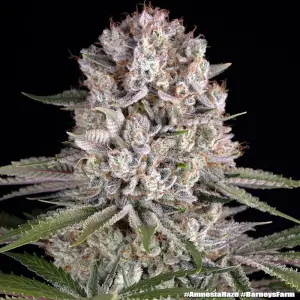
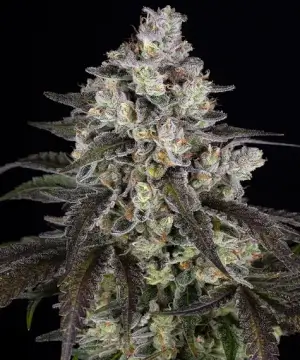
The nose of Laughing Buddha is sweet, fresh and exotic, with tropical fruit at the front and a spicy edge behind it. Descriptions mention lime, banana and raspberry, and some phenotypes add citrus, berry or a slightly gassy note, so each plant can surprise you a little.
On the palate, the breeder describes a mix of roasted pepper, pineapple, lemon and herbs. Published terpene profiles put myrcene, caryophyllene and limonene at the top, with ocimene also cited, which fits the blend of herbal depth, peppery spice and bright citrus that develops during the cure.
The effect starts in the head with an uplifting, euphoric and energetic rush that easily turns into fits of laughter in good company. It is often described as an intense, spacey sativa high that stays clear and active rather than sedating, making it a natural pick for daytime sessions, conversation and creative plans. Experienced smokers point out that it is potent, so a light hand goes a long way.
Specifications on Laughing Buddha
| Feminized Seeds | |
| Seed bank | Barneys Farm |
| THC Content | High (15-25%) |
| Indica/Sativa Genotype | Indica +60% |
| Flavor | Fruity, Citrus, Sweet |
| Suitable for extractions | |
| Effect | Stimulating |
| Outdoor harvest | Standard (Autumn) |
| Indoor flowering | Standard (10-14 weeks) |
| Indoor yield | High (500-600 g/m2) |
| Outdoor yield | High (400-1000 g/plant) |
| Genetics | Tailandia, Jamaican |
| CBD content | Low (0-1%) |
Questions and answers
Laughing Buddha related products (Barneys Farm)