Cannabis seeds













 Alchimia now available in the USA!
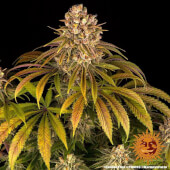
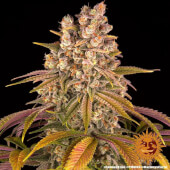
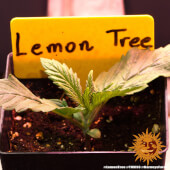
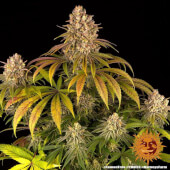

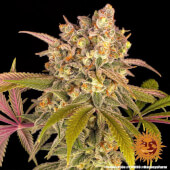
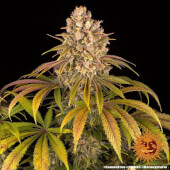
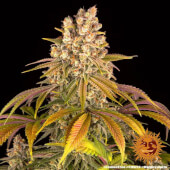
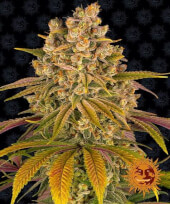
Information on Lemon Tree
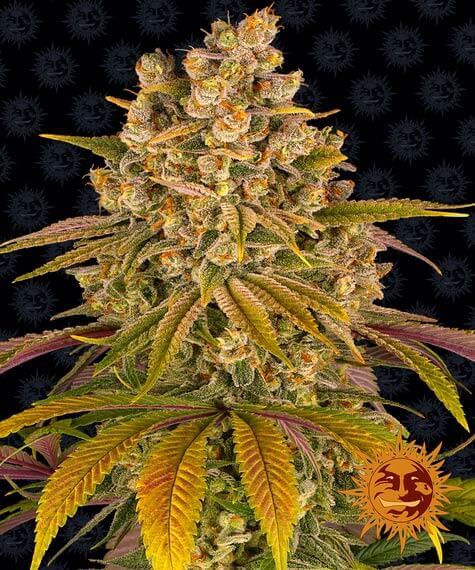
Lemon Tree is a feminized photoperiod strain from Barney's Farm that joins two American classics, Lemon Skunk and Sour Diesel, in one balanced hybrid of roughly 55% indica. Its buds carry a sharp sour-lemon aroma layered over skunk and diesel. The breeder rates THC in the mid-to-high 20s, around 26-28%, while more conservative figures of 20-25% are also reported, and the effect pairs a happy, euphoric lift with a calm, relaxed body.
Where Lemon Tree comes from
The Lemon Tree name grew out of the California scene of the early-to-mid 2010s, where a citrus-heavy hybrid believed to be Lemon Skunk x Sour Diesel became a modern lemon standard. You will also see it on menus as Lemon Tree OG, and it has since become a parent of newer citrus lines such as Gelonade and Melonade.
For years the original was passed around mainly as a clone, and seeds were hard to come by. Barney's Farm built its feminized line around that same Lemon Skunk x Sour Diesel pairing, so home growers can now start from seed instead of chasing a cutting.
Lemon Tree has competition credentials of its own: an entry of Lemon Tree flower placed 8th in the flower category at the 2017 Emerald Cup in California, and a Lemon Tree cross also took second place in that year's distillate category.
Genetics and plant structure
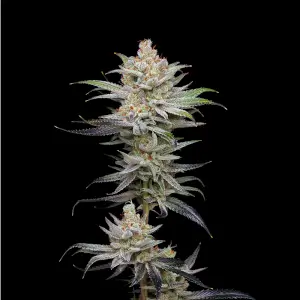
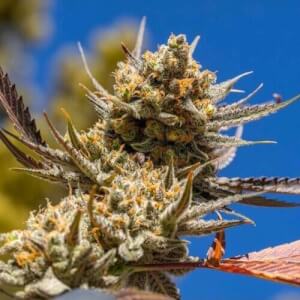
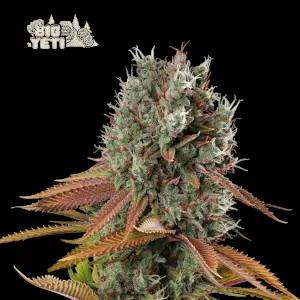
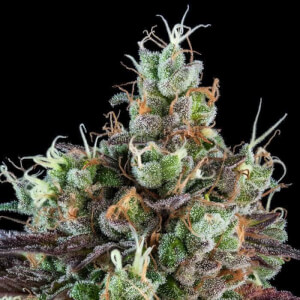
Lemon Tree is a Lemon Skunk x Sour Diesel hybrid with an indica lean of about 55/45, although it is also described as closer to 60% indica. That balance shows in a sturdy, medium-height plant that finishes with compact, light green buds heavily coated in trichomes.
CBD stays low, under 1%, so the experience is driven by THC and terpenes. Resin production is a highlight, and growers often note that the frostiest phenotypes are also the most aromatic, which makes them the ones to keep if you plan to select a keeper.
Lemon Skunk
Lemon Skunk is a Skunk-family selection linked to Las Vegas, where a lemon-scented Skunk phenotype circulated as a clone among local growers in the late 1990s and early 2000s. It stood out for an intense lemon-peel aroma while keeping the vigor and yield of classic Skunk, whose roots go back to Afghan, Colombian and Mexican landraces.
Its exact path is part of cannabis folklore. Most accounts place the cut in Las Vegas, while at least one breeder traces it to a Colorado grower known simply as Lemonman.
Lemon Skunk's citrus talent did not stop with Lemon Tree. Crossed with Super Silver Haze, it became one half of Super Lemon Haze, which took first place at the High Times Cannabis Cup in Amsterdam in 2008 and again in 2009.
Sour Diesel
Sour Diesel is an East Coast legend that took shape in New York in the 1990s, with Chemdawg 91 as the mother and a mysterious Diesel donor on the other side. It became a connoisseur favorite in the city and brings the fuel-and-sour edge that runs through Lemon Tree's nose.
The cross was a happy accident. In late 1994 a Chem 91 plant was pollinated by a stray hermaphrodite in a friend's grow room, and the man who named the result, known as AJ, later said he was simply lucky to be standing in the right place at the right time. By the late '90s, Wall Street buyers were reportedly paying $800 to $1,000 an ounce for it.
Growing Lemon Tree
Indoors, Lemon Tree reaches about 90-100 cm and finishes in 65-70 days of 12/12, although some growers have harvested quicker phenotypes at around 60-65 days. Yields land around 600-650 g/m², and the breeder quotes up to 700 g/m² in a well-tuned room.
The breeder suggests a 4-5 week vegetative phase with low-stress training, and a single topping is usually enough to open the canopy. Give it a roomy container and space to spread, since growers report that cramped roots cost yield, and light defoliation helps air and light reach the inner buds.
Outdoors, plants grow to 150-200 cm and can produce up to 1.5 kg per plant, finishing in the second half of October in the Northern Hemisphere. It suits warm and temperate climates and is a poor match for cold regions, where rain close to harvest raises the risk of bud rot.
Most growers rate Lemon Tree easy to moderate, so it works for first-timers as well as experienced hands. Aim for 24-27°C daytime temperatures and a soil pH of 6.0-6.5, then lower relative humidity to 45-50% from week six of flower.
The smell gets loud in the second half of bloom, so a carbon filter is worth having in place. After the chop, dry slowly at about 16°C and 60% humidity and cure for at least three weeks to protect the citrus terpenes.
Flavor, aroma and effect
The terpene profile is led by limonene and myrcene, which explains the bright lemon top note and the softer, earthy base. Breaking a bud releases sour lemon, a hint of exotic fruit and a skunky, gassy undertone, and some phenotypes lean harder toward Sour Diesel when the jar is opened.
On the palate it tastes like fresh lemon with a tropical, sour citrus edge, finishing with a light diesel note on the exhale. Growers often describe a sweet-tart lemon flavor that is intense and lingers after the session.
The effect opens with a happy, euphoric mood and a clear mental spark that can feel creative. As it settles, a calm body relaxation joins in without tipping into heavy sedation for most people, and smokers describe it as strong and long-lasting.
Some even find the order reversed, starting relaxed and turning more energetic as the session goes on. That balance makes Lemon Tree a flexible daytime smoke for growers who put flavor first.
Specifications on Lemon Tree
| Feminized Seeds | |
| Seed bank | Barneys Farm |
| THC Content | High (15-25%) |
| Indica/Sativa Genotype | Indica +60% |
| Flavor | Fruity, Citrus, Skunk, Sour, Gas |
| Easy to grow | |
| Effect | Stimulating |
| Outdoor harvest | Standard (Autumn) |
| Indoor flowering | Fast (-9 weeks) |
| Indoor yield | Very high (+600 g/m2) |
| Outdoor yield | Very high (+1000 g/plant) |
| Genetics | Lemon Skunk, Sour Diesel |
Questions and answers
Lemon Tree related products (Barneys Farm)