Cannabis seeds













 Alchimia now available in the USA!
Information on Shaman Regular
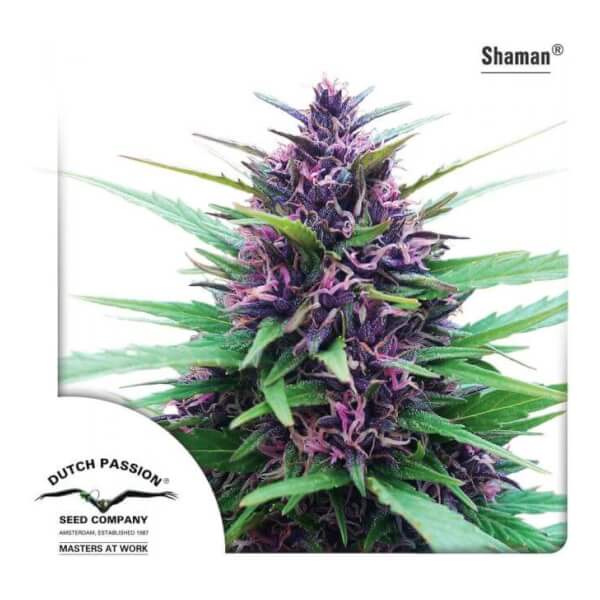
Shaman by Dutch Passion is the regular-seed edition of one of the Dutch bank's long-standing outdoor classics, an F1 hybrid of Purple #1 and an early Skunk with a clear sativa lean. Its flowers combine a sweet, spicy and slightly woody nose with fruity and floral touches, THC in a moderate 14–17% range (figures vary between sources), and an uplifting, energetic high that suits the daytime.
Because these are regular seeds, each pack produces both male and female plants. That makes this original format especially interesting for growers who want to select their own mother plant or keep a male for breeding projects, which is exactly how Shaman was first offered.
The story behind Shaman
Shaman's roots go back to the early 1980s, which places it among the oldest genetics still in the Dutch Passion catalog. It was shaped through years of outdoor selection in the Netherlands, in real seasons with rain, humidity and cold nights, with only the most vigorous offspring kept for the next round.
For a long time the strain was sold under a simple descriptive name, Purple/Skunk, before it was renamed Shaman. It was originally developed and released as a regular seed, and the feminized version of Shaman arrived much later.
Among outdoor growers Shaman has earned the nickname The Forest Whisperer. Its tolerance of damp weather and its open, airy structure made it a long-time favorite of guerrilla growers planting in woodland clearings, far from any garden.
Shaman has also become a parent in its own right, and around a dozen later hybrids carry it in their pedigree.
Genetics and plant structure
Shaman combines a selected male Purple #1 with a high-quality early Skunk female, producing a first-generation hybrid with plenty of hybrid vigor. The result is sativa-dominant, with only a small share of indica genes, and both its structure and its effect reflect that sativa side.
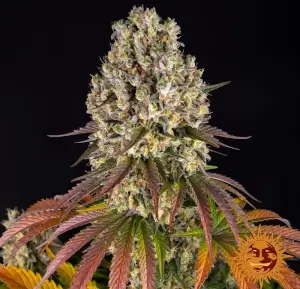
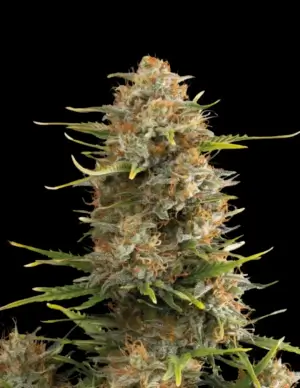
Plants grow with open branching and long internodes, slender leaves and a natural Christmas-tree shape. Buds form along long colas with space between them, a relatively airy bud structure that helps the plant shrug off rain and humidity. About half of the plants develop pink to dark purple tones in the buds or pistils, especially when autumn nights turn cool.
Purple #1
Purple #1 is one of Dutch Passion's original purple strains, dating back to the early 1980s. Its indica side traces to a purple Afghani that was crossed in Holland with other indica and sativa lines, and the result became a color reference that many other seed banks later used in their own breeding.
The strain is known for calyxes that turn purple soon after flowering begins, sticky purple sugar leaves and an early finish adapted to the Dutch climate. In Shaman, this parent contributes the purple coloring and part of the quick, uplifting character of the high.
Skunk
The mother of Shaman was an exceptional early Skunk chosen from Dutch Passion's breeding stock. Skunk genetics descend from a blend of the Colombian Gold and Acapulco Gold sativa landraces with pure Afghani indica, a mix believed to have been put together in Southern California in the early 1970s.
Skunk brought stability, productivity and an early finish to countless hybrids. In Shaman, its influence shows in the plant's vigor and generous production, which balance the color and lighter structure of the purple side.
Growing Shaman
Shaman was bred above all for outdoor gardens and greenhouses in temperate climates with moderate summers, and it is considered easy to grow, even for beginners. Plants usually reach 1–2 m (about 3–6.5 ft), but with an early start indoors they can climb to 2–3 m (6.5–10 ft) or more in good conditions.
Flowering takes around 7–9 weeks, with some phenotypes done in about 50 days and others needing up to 65. Outdoors in northern latitudes, harvest arrives between late September and early October, which helps the crop beat the worst of the autumn weather.
Production is generous, with yields estimated at around 400 g/m² (about 1.3 oz/ft²). Large outdoor plants can produce several hundred grams each, and experienced growers report 500–750 g (roughly 1.1–1.6 lb) per plant, with up to 1 kg in ideal conditions and colas reaching 40–75 cm (16–30 in).
Shaman shows good resistance to bud rot and mold and handles cold snaps, rain and humidity well, although no plant is immune. It responds well to topping, FIMming, LST, supercropping and SCROG, and in wet climates a light defoliation improves airflow through the canopy.
For the best results, start seeds indoors in March or April and transplant after the last frost into containers of at least 50 liters (about 13 gallons) or into open ground. With regular seeds, watch for male plants at the start of flowering and remove them early unless you plan to collect pollen.
Flavor and effect
Shaman's terpene profile is spicy and herbal, with a nose that mixes sweet fruit, flowers and spice, plus occasional sour or piney notes. On the palate it is mainly sweet and spicy with a smooth, woody finish; some phenotypes add a sour edge, and green plants tend to taste slightly sweeter than purple ones.
The effect is a classic sativa up high: energetic, social and creative, with medium strength and duration. It is not a sedating smoke, which makes Shaman a good fit for daytime sessions, creative projects or relaxed conversations with friends.
Specifications on Shaman Regular
| Regular Seeds | |
| Seed bank | Dutch Passion |
| THC Content | Medium (1-15%) |
| Indica/Sativa Genotype | Indica +60% |
| Flavor | Fruity, Sweet, Skunk |
| Moisture/Mold Resistant | |
| Effect | Stimulating |
| Outdoor harvest | Standard (Autumn) |
| Indoor flowering | Fast (-9 weeks) |
| Indoor yield | High (500-600 g/m2) |
| Outdoor yield | High (400-1000 g/plant) |
| Genetics | Super Skunk, Purple #1 |
Questions and answers
Shaman Regular related products (Dutch Passion)