Cannabis seeds













 Alchimia now available in the USA!



Information on Honey Bear
Honey Bear is a feminized, sativa-leaning hybrid from Humboldt Seed Co, selected first and foremost as a solventless washer. It smells loud and tropical, with ripe papaya, banana and honey over a faint cheesy funk, and it tests around 25% THC with an energizing, clear-headed effect.
A strain named after Den Bear
Honey Bear was one of the winners of Humboldt Seed Co's annual Northern California pheno hunt, picked at the company's anchor farm specifically as a hash plant. The selection went beyond flower quality and focused on how the resin washed and pressed.
The name honors Den Bear, a Humboldt local named Dennis who worked on the anchor farm for years. He was one of the county's original back-to-the-landers, and the team remembers him as a kind, thoughtful presence who championed responsible breeding.
When Honey Bear went through the wash, the rosin came off the press sparkly white, smelling of papaya, banana and honey. Those who saw the hunt put it simply, saying the plant drips, quite literally, on all fronts.
Humboldt Seed Co itself dates back to 2001 in the Emerald Triangle, and since 2018 it has run phenotype hunts with California farmers that now cover thousands of individual plants. Honey Bear is a direct product of that farm-first selection process.
Be aware that several unrelated strains share the Honey Bear name, including an indica-dominant Honey Bear Kush tied to the OG family. The Humboldt Seed Co version is the sativa-leaning washer described here, with a completely different tropical profile and a far livelier effect.
Genetics and plant structure
Honey Bear sits at roughly 60% sativa and 40% indica. Its pedigree combines Honey Banana UKC S1 with Papaya Tallyman, and the line was finished with an earlier Honey Bear selection.
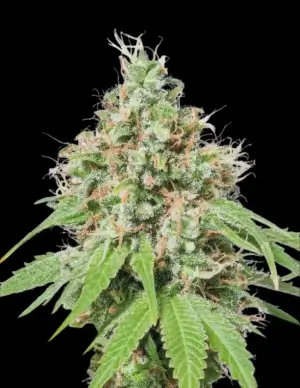
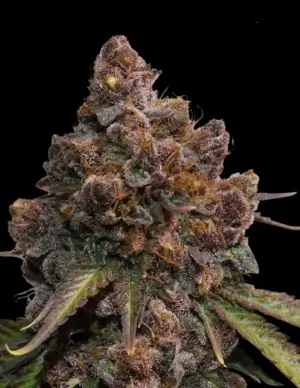
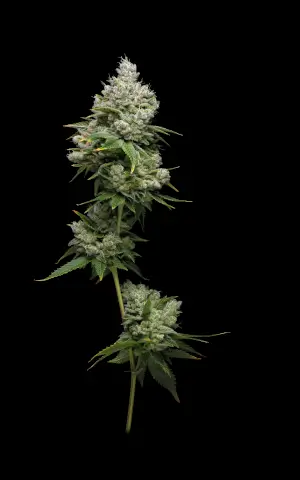
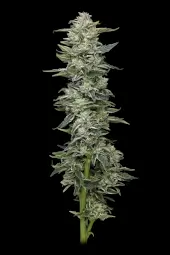
The plant grows upright and vigorous, with long, frost-covered colas, large bracts and very little leaf around the flowers. That low-leaf structure makes for quick trimming and keeps the resin heads exposed, which is exactly what hash makers look for.
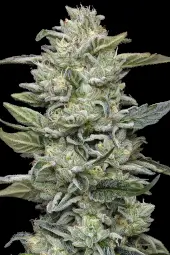
Under good conditions the plant can grow large, so it rewards growers who give it space and a solid training plan. The finished buds are dense and coated in resin, with the frost extending well down the colas.
Honey Banana UKC S1
Honey Banana UKC S1 is a self-pollinated, or S1, line, created by crossing a single plant with itself to concentrate its traits. Its name points to the banana and honey character that runs through Honey Bear, along with the savory, cheese-like funk sitting under the fruit.
Papaya Tallyman
Tally Man, also listed as Tallyman or Tallymon, is an Oni Seed Co creation built from a Banana OG x Do-Si-Dos mother and a Papaya male. It is known for short, dark plants and a loud, sunscreen-like nose that moves between banana, coconut, mango and sour apple.
The strain earned its reputation among solventless hash makers, since Papaya-line crosses tend to produce resin that washes well. That makes it a logical partner in a strain hunted as a washer, and it is the source of Honey Bear's papaya and tropical candy layer.
Tally Man itself flowers in about 63 days and has never been released as feminized seed, which makes Honey Bear one of the few ways to work with this line in a feminized package. Its Banana OG side adds a faint OG gas and peppery edge to the tropical fruit, while some plants also show a lilac note.
Growers who trim Tally Man often say the whole room ends up smelling like a tropical candy shop. It is a fair preview of what a Honey Bear harvest does to a drying room.
Growing Honey Bear
Indoors, Honey Bear finishes in about 45 to 50 days of flowering, although some plants may want closer to 8 or 9 weeks to fully ripen. Yields are rated high indoors and in greenhouses, and the plant can grow large when given room, so plan your space and training accordingly.
Outdoors, the yield climbs to very high, and in Northern California plants are typically ready between September 15 and 30. It is best suited to temperate, Mediterranean-style climates like the Emerald Triangle where it was selected.
Growers describe Honey Bear as vigorous and largely beginner-friendly, and it adapts to indoor, outdoor and greenhouse setups. For hash makers, reported wash returns reach up to 3%, and the resulting rosin presses bright white with golden tones.
Flavor and effect
The terpene profile is led by ocimene, with caryophyllene and myrcene in support. Together they produce a sweet, tropical nose of pineapple, papaya and banana, finished with honey and a faint, savory cheese note.
On the inhale, expect sweet papaya and honeycomb, a honey-forward tropical character that carries straight into the rosin. It is a profile that works well in a joint and pays off even more after the press, where the fruit comes through clean and bright.
The effect is uplifting and energizing, with a clear head that suits daytime plans, creative work and social settings. A gentle hybrid balance follows, keeping the body comfortable without becoming heavy, and with THC around 25% it deserves a measured approach.
Reported side effects are the usual dry mouth and dry eyes, with occasional dizziness. For most people, Honey Bear is a daytime strain best enjoyed with friends or a project on the table.
Specifications on Honey Bear
| Feminized Seeds | |
| Seed bank | Humboldt Seed Company |
| THC Content | High (15-25%) |
| Indica/Sativa Genotype | Sativa +60% |
| Flavor | Fruity, Sweet |
| Fast Flowering | |
| Suitable for extractions | |
| Effect | Stimulating |
| Outdoor harvest | Fast (Late summer) |
| Indoor flowering | Fast (-9 weeks) |
| Genetics | Honey Banana, Papaya Tallyman, Honey Bear |
Questions and answers
Honey Bear related products (Humboldt Seed Company)