Cannabis seeds













 Alchimia now available in the USA!
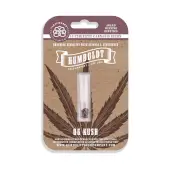
Information on OG Kush
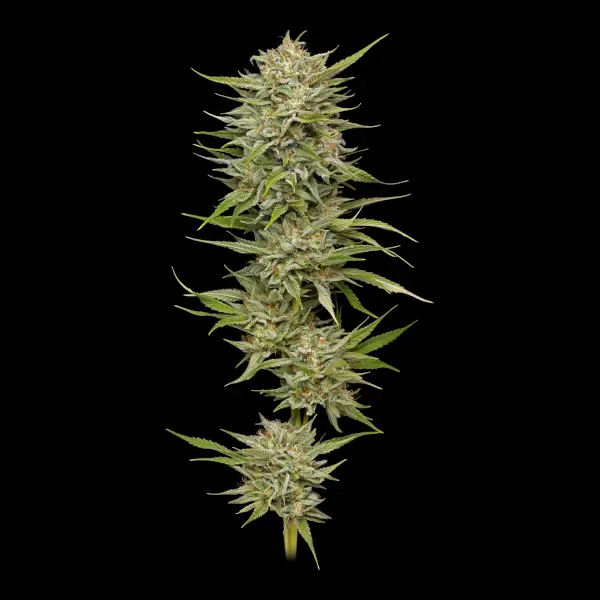
OG Kush by Humboldt Seed Company is the Emerald Triangle breeder's own feminized version of the strain that shaped West Coast cannabis in the 1990s. This indica-dominant line keeps the fuel, pine and earth of the classic cut, with THC averaging 22 to 26%. The effect opens with a clear cerebral lift and settles into a deep, relaxing body stone that suits the evening.
The story behind OG Kush
The exact birth of OG Kush is still argued over, and that mystery is part of its pull. Most accounts agree that it surfaced in Florida in the early 1990s and then reached Los Angeles, where it took hold in the San Fernando Valley and became the reference for indoor flower.
Florida grower Matt "Bubba" Berger is usually credited with the original plant, and Los Angeles cultivator Josh D (Josh Del Rosso) with turning it into a West Coast staple. Josh has said that Berger returned from Florida in 1996 with the cutting, a low-yielding plant with small buds but a layered smell of pine, lemon, skunk and vanilla.
Of the cuttings brought west from Florida in the mid-1990s, the story goes that only one survived. In 1997 Josh D took that plant to a Bay Area cannabis contest, and he later recalled it scoring tens in every category.
By the late 1990s the cut was moving under so many names that Josh joked there were a hundred different names for the same clone. Wholesale pounds reportedly reached around $8,000 at the peak, and "kush" turned into slang for top-shelf weed as rappers such as Snoop Dogg and B-Real of Cypress Hill carried the name far beyond California.
Nobody agrees on what OG stands for. Original gangster is the popular reading, and one tale has a Southern California grower brushing off the mountain grown theory with "Nah, bro, it's ocean grown." Josh D himself has said OG simply means original.
OG clones reached the Emerald Triangle around 2004 and 2005, and the strain soon became a pillar of the Humboldt market. Humboldt Seed Company, founded in 2001 in the same region, set out to build a stabilized seed line that holds on to the classic gas while growing more easily and producing more than many OG phenotypes.
Genetics and plant structure
The breeder lists this line as OG Kush x OG Kush, worked to the F6 generation and backcrossed three times, so older seed packs may show earlier generation labels. The plant is roughly 70% indica and 30% sativa, though the breeder's own notes also describe it as closer to 80/20.
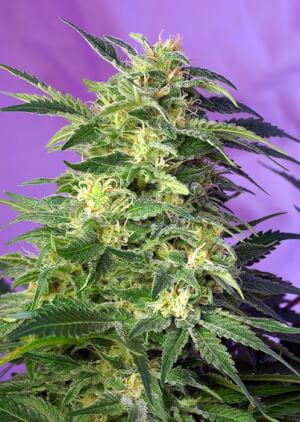
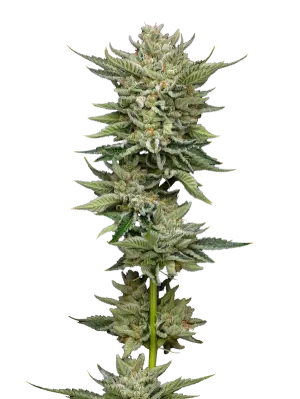
Plants grow short and bushy, with wide dark green leaves, dense foliage and strong stems that carry heavy buds well. Expect them to roughly double in size during the flowering stretch, so leave some headroom when you flip.
OG Kush is generally believed to blend Chemdawg, Lemon Thai and a Hindu Kush landrace. Other genealogies trace the clone-only OG Kush to an Emerald Triangle plant crossed with Hindu Kush, which shows how open the family tree still is.
Chemdawg
Chemdawg goes back to a Grateful Dead show in Deer Park, Indiana, on June 6, 1991, where bud sourced from Colorado was sold as Dog Bud and Chem Weed. In OG Kush, this side is linked to the diesel edge and the cinnamon and clove notes of caryophyllene.
A buyer named Greg found 13 seeds at the bottom of a bag of that parking-lot weed. He sprouted four, kept three females and merged the two nicknames into Chemdog, a spelling that later became Chemdawg when the grower TopDawg took up the line.
Hindu Kush
Hindu Kush comes from the Hindu Kush mountains of Afghanistan, a region with a long tradition of sieved hashish. Travelers on the Hippie Trail in the 1960s and 1970s noticed these short, broad-leaf plants with dense, resinous flowers, and seeds reached North America between the late 1960s and early 1980s.
Growers prized this landrace for its compact stature, early maturity and heavy resin output. One documented genealogy credits the Hindu Kush in OG Kush to a line kept by the breeder Neville.
Lemon Thai
One widely told account has a Sunset Beach grower crossing a Chemdawg cut with a male Lemon Thai x Old World Paki Kush in the 1990s. The Lemon Thai side is tied to the skunky citrus character that limonene brings to the OG nose.
Growing OG Kush from Humboldt Seed Company
Indoors, this OG Kush flowers in about 60 days and can yield up to 500 g/m². The breeder calls it easy to grow and suitable for growers at different skill levels, which is not something many OG cuts can claim.
Outdoors, harvest falls between October 1 and 15, with yields of up to 600 g per plant. It thrives in temperate or continental climates and handles harsh conditions well, but Kush genetics are prone to powdery mildew in humid air, so keep the canopy open and watch for fungus gnats.
To push the harvest, top the plants, use low-stress training and defoliate in late veg so light reaches the lower sites. Give extra nitrogen during veg, then shift to phosphorus and potassium in bloom and taper nitrogen in the final weeks.
Flavor and effect
Myrcene leads the terpene profile with earthy, spicy tones, followed by limonene for a skunky citrus lift and caryophyllene for a diesel note with hints of cinnamon and clove. The aroma is gassy and fuel-like over earth, citrus and spice.
On the palate it turns earthy, piney and woody, with the fuel lingering on the exhale. Cured buds keep that gas-forward OG character that growers look for in this family.
The effect begins with a cerebral buzz that relaxes the mind and can spark creative thinking. It then spreads into a full-body stone that loosens the muscles, and larger sessions can end in couch lock, so it fits best at the end of the day.
Specifications on OG Kush
| Feminized Seeds | |
| Seed bank | Humboldt Seed Company |
| THC Content | High (15-25%) |
| Indica/Sativa Genotype | Indica +60% |
| Flavor | Woody, Gas, Earthy |
| Easy to grow | |
| Fast Flowering | |
| Effect | Relaxing |
| Outdoor harvest | Standard (Autumn) |
| Indoor flowering | Fast (-9 weeks) |
| Genetics | OG Kush |
Questions and answers
OG Kush related products (Humboldt Seed Company)