Cannabis seeds













 Alchimia now available in the USA!
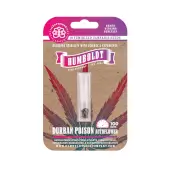
Information on Durban Poison auto
Durban Poison Auto is the autoflowering take on the South African classic from Humboldt Seed Company, a feminized, sativa-dominant strain that keeps the drive of the original line. It opens with a nose of minty fuel, pine and a touch of sweetness, carries an average THC of 28–32% and delivers a clear, wide-awake high with no sedation.
A Humboldt cut kept alive for decades
Durban Poison made a name for itself in Humboldt County in the late 1990s, where it stood out among the region's gardens. Its long flowering made it a poor fit for commercial production, so only a handful of legacy growers kept clones alive through the years that followed.
In 2021 the original Durban cut finally reached Humboldt Seed Company. The team spent the following years turning it into an autoflower over at least four generations, starting from a minty phenotype of their own Mint Jelly Auto.
The breeder openly admits this is not its quickest auto, and the extra weeks are a deliberate choice. That trade-off buys more yield, more cannabinoids and a fuller terpene profile than a rushed version would offer.
Genetics and plant structure
The pedigree reads Mint Jelly Auto x Durban Poison Het x Durban Poison Auto, with the Durban side refined through four backcrosses. The result is roughly 90% sativa and 10% indica, with ruderalis genetics providing flowering that runs independently of the light cycle.
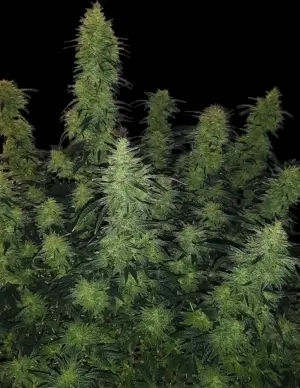
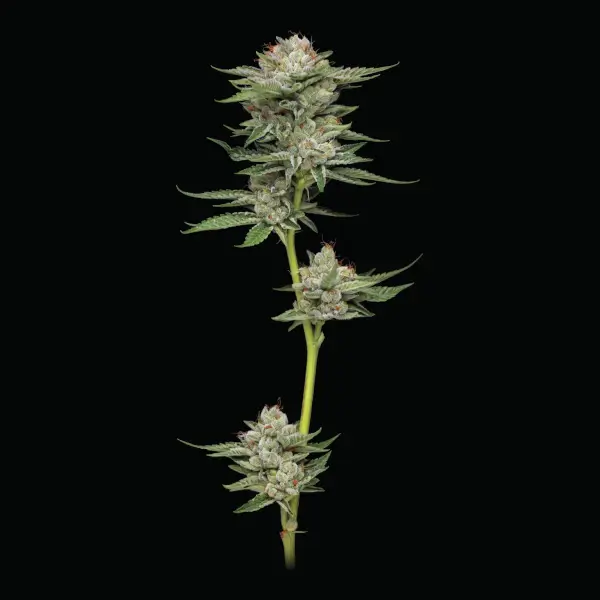
Plants grow with a robust frame and form separate, well-defined bud sites rather than one solid mass. The colas finish light green and heavily frosted, and the dense flowers carry enough resin to make this one of the breeder's top choices for solventless and solvent hash.
Durban Poison
Durban Poison is a landrace sativa from the port city of Durban, South Africa. Breeders have long valued it for its early ripening and heavy resin, and it later became part of the backbone of the Cookies family through an F1 Durban cross.
In the 1970s, Ed Rosenthal tried South African cannabis at the Transvaal, an Amsterdam coffee shop run by South Africans, and found seeds in the bag. He took them back to California, where he and Mel Frank worked the line. The early plants ripened fast but showed intersex traits, so the seeds went to Skunkman Sam, who bred that flaw out over many cycles before the strain traveled back to Amsterdam in the mid-1980s.
Rosenthal suspected the strain would feel at home in California's Mediterranean climate, and he handed seeds out to many growers. Back in South Africa, Durban was a seasonal crop because of the country's distance from the equator, and by 2010 the line had taken Best Sativa at the High Times Cup.
From there the line reached Neville Schoenmakers and The Seed Bank of Holland, which spread it among European growers. Humboldt Seed Company worked from its own selection labeled Durban Het #11, picked in a phenotype hunt and combined with an autoflowering Durban line to keep the sharp, energetic character of the original.
Mint Jelly Auto
Mint Jelly Auto is a house autoflower bred from Sour Apple Auto and Hella Jelly through several rounds of selection during the pandemic. It leans 60% indica, borrows the flower structure of Humboldt Pound Cake and finishes in about 70 to 80 days from germination.
Its profile of sweet mint, vanilla and cake batter explains the cool, minty edge found in this Durban. The breeder credits Mint Jelly with a record THC result for an autoflower, which goes a long way toward explaining the potency of its offspring.
Growing Durban Poison Auto
Expect a cycle of up to 100 days from sprout to harvest, around 14 to 15 weeks, which is longer than most autoflowers. Growers who plan around that window can count on 450–550 g/m² indoors when conditions are dialed in.
The strain rates high in outdoor, greenhouse and light-deprivation gardens, where single plants can return 150–350 g per plant. Because flowering does not depend on day length, the harvest date follows the sowing date rather than the season.
Difficulty sits at a moderate level, mostly because of the longer cycle compared with faster autos. The plant shows good natural resistance, and gentle low-stress training helps open the canopy, while topping is usually skipped, as with most autoflowers.
Harvest arrives with dense, trichome-covered colas that dry into hard, frosty buds. Growers who make hash will appreciate the resin coverage, which holds up well for both ice water extraction and solvent-based methods.
Flavor, terpenes and effect
The aroma combines mint, fuel and fresh pine that recalls a freshly cut Christmas tree, finished by a light sweetness. On the palate the same notes return as mint, pine and gas, with a cool, sharp exhale.
The terpene profile is led by caryophyllene, limonene and pinene, which matches the spicy, citrus and pine character. CBD and CBG are practically absent, so the experience rests on its high THC content and the strong terpene load.
Classic Durban buds are known for a pine tree shape, light orange pistils and sticky resin, and this auto keeps much of that look. Breaking a bud releases a fresh, lemony pine burst before the minty finish takes over.
The high arrives as a clear, energizing head rush that keeps the mind active and focused. It lasts a long time and stays non-sedating, which makes it a natural fit for daytime sessions and creative or social plans.
Specifications on Durban Poison auto
| Feminized Seeds | |
| Auto Seeds | |
| Seed bank | Humboldt Seed Company |
| THC Content | Extreme THC (+30%) |
| Indica/Sativa Genotype | Indica +90% |
| Flavor | Sweet, Woody, Gas |
| Effect | Stimulating |
| Full cycle | Standard (10-14 weeks) |
| Genetics | Mint Jelly Auto, Durban Poison, Durban Poison Auto |
Video of Durban Poison auto
Questions and answers
Durban Poison auto related products (Humboldt Seed Company)