
 Cannabis seeds













 Alchimia now available in the USA!



















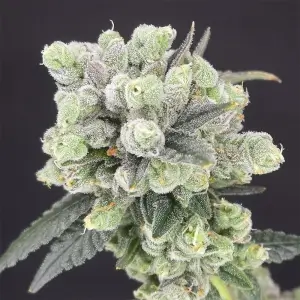
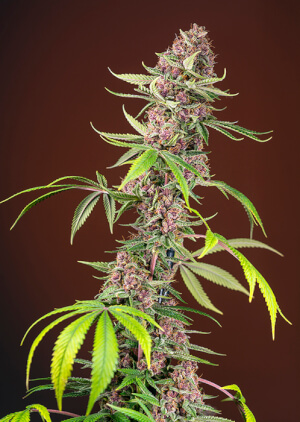
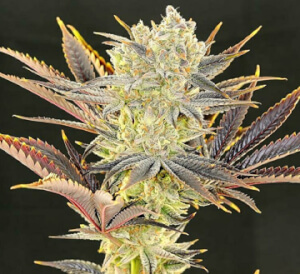

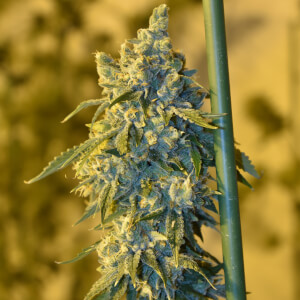
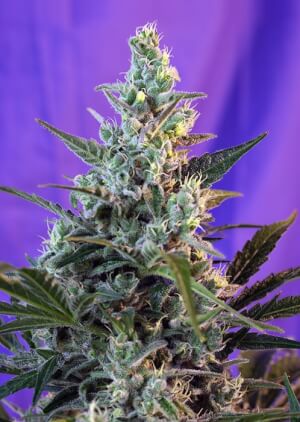
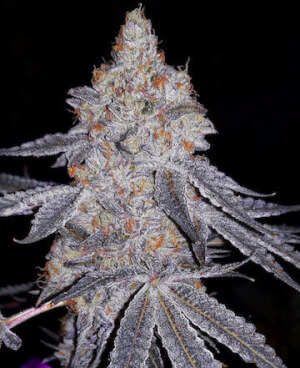
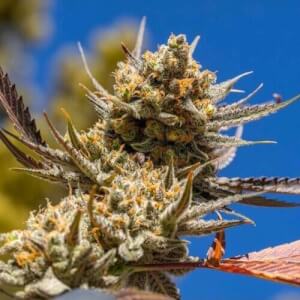
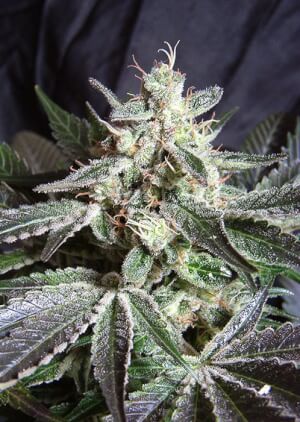
According to the accounts gathered by Scrogger and Growers Network, Segal was arrested in 1989 during Operation Green Merchant, a federal sweep many growers later called Black Thursday, with around 12,000 plants. While serving time, he worked out a way to grow fewer, bushier plants with longer vegetative cycles, since high plant counts were what had made his bust so notable.
The idea spread through grow literature in the following years. Greg Green's The Cannabis Grow Bible notes that SCROG was originally designed for grow spaces with limited height lit by fluorescent tubes, before growers moved to high-intensity lighting.
How a SCROG works
A screen, often 2-inch mesh made of wire, nylon or even fishing line on hooks, is set at the height where the canopy should sit. Plants grow up to it, then each new shoot is tucked and woven horizontally so the branches spread across the net rather than climbing toward the light.
Many growers top or FIM their plants first to multiply the main stems, and Scrogger points out that proper topping produces even numbers of branches that fill the screen symmetrically. Greg Green describes training plants horizontally until about two weeks into flowering, then letting the tops grow vertically through the screen.
Everything below the net is usually stripped. Leaves and small shoots under the screen receive little light, so removing them sends energy to the colas above and improves airflow beneath the canopy.
SCROG versus SOG
The two methods share a goal, an even canopy under the light, but take opposite paths. SOG uses many small plants with almost no vegetative growth, while SCROG uses fewer plants and a vegetative stage that Greg Green estimates runs one to three weeks longer.
That difference matters for home growers in the US. Many state laws cap plant numbers, such as Colorado's limit of six plants per person with no more than three flowering, and Scrogger notes that plant-count limits rule out SOG for many growers, making SCROG a practical way to fill a tent legally.
What the research says
One of the few formal studies of the method came from New Zealand's Institute of Environmental Science and Research. In a 2010 paper in Forensic Science International, Knight and colleagues grew hydroponic SCROG crops to replicate typical indoor operations seized by police, and THC in individual plants ranged from 4.3 to 25.2%.
The researchers were candid about their limits: the team was inexperienced, and each of the three growing cycles ran into a different problem that likely cut both yield and THC. The study still showed strong variation within each plant and between varieties.
Belgian researchers led by Wouter Vanhove later concluded that indoor yield is better expressed per square meter than per plant and that it varies significantly between strains. Work by Danziger and Bernstein at Israel's Volcani Center also found that architecture treatments that let more light reach the plant improved cannabinoid uniformity, the same principle that drives SCROG pruning.
Traits to look for in a SCROG strain
The first is flexible branching. Plants with long, supple branches and wide node spacing can be bent and tucked repeatedly, while Dutch Passion notes that some indicas have branches prone to snapping during training.
The second is enough stretch to fill the screen. Dutch Passion points out that the low stretch of pure indicas can make filling the net take longer, while sativa-leaning hybrids cover it faster once the flip triggers their growth spurt.
The third is leaf shape and canopy openness. Thin-fingered sativa leaves let light pass through a dense canopy more easily than broad indica leaves, which helps lower bud sites develop instead of staying shaded.
Strains that suit the screen
Super Silver Haze is a classic example; Green House Seeds describes it as developing long branches that thrive in a ScrOG and respond well to LST, with THC commonly near 19%. Super Lemon Haze also works well, and GrowDiaries advises shaping it with topping, LST or ScrOG before its flowering stretch becomes hard to redirect.
Amnesia lines are frequent picks thanks to tall, flexible frames and a stretch often quoted at 1.5 to 2.5 times their height after the flip. Growers on THCFarmer also suggest Jack Herer, Blue Dream, Durban Poison, Pineapple Express and Strawberry Cough for small-tent sativa projects where training keeps height in check.
Dutch Passion highlights Desfrán, a pure sativa from the Destroyer line with flexible branches and a reported 200 to 300% stretch in bloom. For growers who prefer autoflowers, the breeder points to Auto Think Different, with numerous slender branches, and Auto Critical Orange Punch, a highly branched auto that fills a screen well.
Autoflowers under a screen
Autoflowers can be scrogged, but their fixed life cycle leaves little room to recover from stress. Gentle low-stress training usually works better than aggressive topping, and choosing a variety with naturally branchy growth does much of the work.
Because autos keep their own schedule, the screen should be in place early so branches can be guided from the first weeks. The goal is the same as with photoperiods: an even canopy where every top sits at a similar distance from the light.
Tips for a productive SCROG
Plan for the stretch before installing the net. A Growers Network lesson reminds growers that plants can gain about 50% in size during bloom, so the screen height and light position need room for that growth.
Greg Green suggests allowing at least one square foot per flowering plant and estimates that a well-run SCROG can average about two ounces of bud per square foot of screen, while warning that hitting that figure takes practice and the right strain. Consistent tucking every day or two during late veg and early flower keeps tops level and stops dominant branches from running ahead.
Choosing a strain for SCROG means choosing a plant that can be shaped. With flexible branches, a healthy stretch and an open canopy, a few plants can cover the whole screen and turn a small, height-limited space into a uniform field of colas under the light.