Cannabis seeds













 Alchimia now available in the USA!
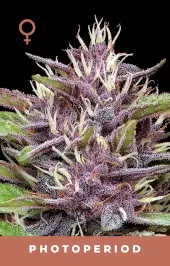

Information on PPD
PPD, the strain formerly sold as Purple Panty Dropper, is a feminized photoperiod hybrid from Humboldt Seed Company, the Emerald Triangle breeder founded in 2001. It is an indica-dominant plant balanced with a real sativa influence, built on a three-way cross of Matanuska Mist, Oregon Grape and Purple Haze.
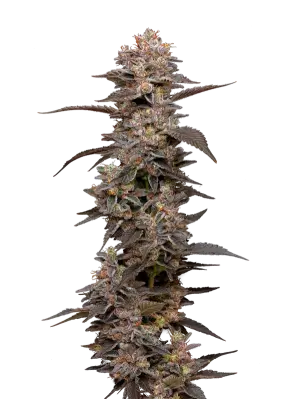
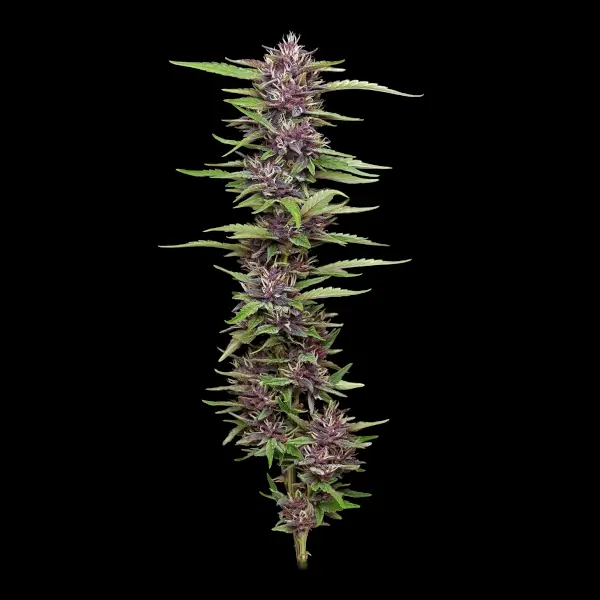
The buds carry a sweet, floral Concord grape aroma and finish with plenty of purple color. THC is listed between 18 and 25% by the breeder and other sources, and the effect opens uplifting and euphoric before turning into relaxed physical calm. CBD stays low, at around 1% or less, so this is a strain grown for flavor, color and a bright THC-driven mood.
The story behind PPD
The original name was a cheeky one. It was chosen for the deep purple hues of the flowers and for the strain's playful reputation as a romantic mood setter, a nod that many growers still recognize when they hear the three letters. Today the breeder simply calls it PPD, and the genetics behind the abbreviation are unchanged.
What makes PPD especially interesting is its role inside the Humboldt Seed Company catalog. It works as a foundation parent for several of the company's purple and berry lines, and it was backcrossed over many generations, listed as a BX8 line, to lock in its traits. That long work explains why growers describe the plants as uniform and predictable.
PPD is the purple backbone of several Humboldt Seed Company releases. Crossed with Razzleberry it gave rise to Blueberry Muffin, and paired with Blue Dream it produced Humboldt Dream, two strains that carry its grape and berry character forward.
Humboldt Seed Company is known for running large-scale pheno hunts in Northern California, where thousands of plants are grown under real field conditions. That selection culture is part of why a line like PPD has stayed in rotation and kept feeding new generations of the company's berry-forward hybrids.
Genetics and plant structure
PPD is a three-way hybrid that leans to the indica side without losing its sativa spark. The breeder describes it as indica dominant and nicely balanced, so the plant brings together compact, resinous flowers with a lively, upbeat head effect.
In the garden, PPD grows into sturdy, vigorous plants with plenty of side branching and an even canopy. The flowers are moderately dense, coated in resin and tinted purple as they ripen, which makes them as easy to admire in the jar as on the plant.
Matanuska Mist
Matanuska Mist takes its name from Alaska's Matanuska Valley, a region north of Anchorage with cannabis folklore going back to the early 1970s. In this cross it adds part of the indica weight and the hardy structure of the plant.
Matanuska Valley weed was already a talking point in 1975, when a cannabis magazine listed it as the priciest smoke in Alaska at around 70 dollars an ounce. The valley's name has carried that northern mystique in strain names ever since.
Oregon Grape
Oregon Grape is a grape-forward cultivar from the Pacific Northwest craft scene that circulated through cut-sharing circles among Oregon growers. Its name has nothing to do with the native shrub of the same name, which happens to be the Oregon state flower. In PPD it is the clear source of the Concord grape notes and much of the purple coloring.
Purple Haze
Purple Haze is the classic hybrid of Haze and Purple Thai, a sativa-leaning plant known for its spicy, berry-sweet bouquet. The name echoes the 1967 Jimi Hendrix song, although the strain itself came along later. Here it contributes a bright, creative edge and extra purple pigment.
Growing PPD
PPD is suited to both indoor and outdoor growing and is rated moderate in difficulty. Plants grow big, with uniform development across seedlings, which helps keep a tent canopy even and simplifies training.
Indoors, the flowering period runs about 50 days, while a range of 7 to 8 weeks is also cited. Yields are listed as medium to high, with resinous, purple-accented colas that respond well to good light and steady airflow.
Outdoors, harvest arrives from late September to early October, roughly between September 20 and October 5 in the Northern Hemisphere. Outdoor plants grow big and uniform, and with full sun they build the same resinous, purple-tinged flowers seen indoors.
Because the plant branches vigorously, it pairs well with topping and low-stress training to spread the canopy. Keeping humidity in check during the last weeks protects the moderately dense flowers and preserves their sweet grape terpenes through drying and curing.
Flavor and effect
The aroma of PPD is sweet and floral, led by a clear Concord grape note. On the palate, the smoke brings out grape, plum and a touch of lavender, a combination that feels rich and dessert-like without being heavy.
The terpene profile is built on limonene, myrcene and caryophyllene. Limonene adds a bright, uplifting top note, myrcene rounds out the fruit, and caryophyllene brings a soft peppery depth that keeps the sweetness in balance.
The effect starts uplifting and euphoric, with a lively, social mood and a clear head. As the session goes on, a relaxing body feel takes over and the experience turns calm and comfortable, without tipping into heavy couch-lock for most people. Many consumers find it stimulating rather than sleepy, which makes it easy to enjoy while staying engaged in conversation or a slow-paced activity.
With THC in the 18 to 25% range, PPD has plenty of strength, so new consumers should take it slow. It fits well into relaxed afternoons or evenings with friends, where its grape-candy flavor can be enjoyed at an easy pace.
Specifications on PPD
| Feminized Seeds | |
| Seed bank | Humboldt Seed Company |
| THC Content | High (15-25%) |
| Indica/Sativa Genotype | Indica +60% |
| Flavor | Fruity, Sweet |
| Fast Flowering | |
| Outdoor harvest | Standard (Autumn) |
| Indoor flowering | Fast (-9 weeks) |
| Genetics | Matanuska, Oregon Grape, Purple Haze |
Questions and answers
PPD related products (Humboldt Seed Company)