
 Cannabis seeds













 Alchimia now available in the USA!
By crossing the Chocolate Thai with a Mexican variety, Highland Oaxaca Gold, he created the Oregon Purple Thai. In 1979 he also obtained pure Afghan genetics through friends in Northern California. From that foundation, he selected the parent stock for all of his lines.
Plenty of stories circulate about Blueberry, from seed hunters in the mountains outside Chiang Mai to soldiers bringing it back from Vietnam. His son, JD Short, has explained that the truth is less exciting: it all started with a Thai, the Chocolate Thai, an Afghan and an Oaxacan. According to him, the Blueberry phenotype everyone knows today showed up in his father's work around 1979.
The key: sativa mothers and Afghan males
What sets Blueberry apart is how it was made. In the late 1970s, most breeders worked with Afghan females, because they were novel, yielded well, finished early and stayed compact. DJ Short did the opposite: he used sativas as mothers and pollinated them with Afghan males.
According to his son, DJ Short didn't like the smoke of the Afghans, and all his strains were built around the end product. That approach produced a plant with Afghan structure and resin, but with the aromatic profile of the Thai varieties.
Why it stood out
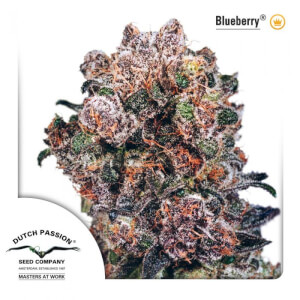
At the time, much of the available cannabis had spicy profiles or the skunky aroma typical of the Afghans. DJ Short had managed to stabilize purple color along with berry and fruit aromas, something that surprised American consumers back then.
JD Short has his own theory about how these genetics spread. In those years, Eugene, Oregon, was a stopover town for musicians who played in Portland and then headed south for a break. Well-off young people who came to hang out took genetics back to Northern California, and once they got there, they caught on quickly.
From Oregon to Europe
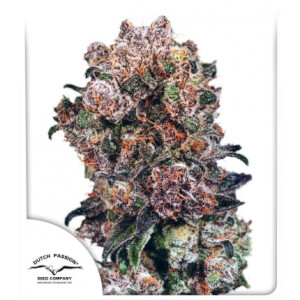
In 1993, DJ Short traveled to Europe to explore the budding Dutch seed industry. Over the following decade, he worked with several European and Canadian seed companies. One of them was Dutch Passion, which released Blueberry, Blue Moonshine, Blue Heaven and Flo, although DJ Short had little say in how those seeds were selected.
Blueberry won Best Indica at the 2000 High Times Cannabis Cup. Two years later, Dutch Passion's Blueberry placed third in the indica category. DJ Short now runs Old World Genetics and is the author of the book Cultivating Exceptional Cannabis.
Plant characteristics
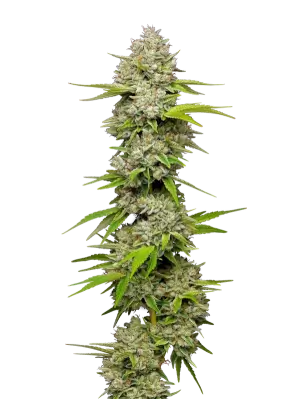
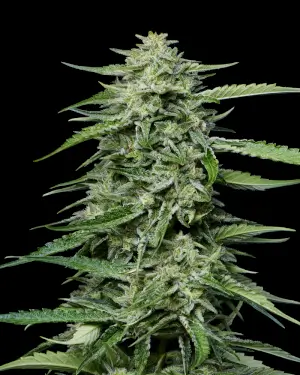
From its Thai side, Blueberry inherits elongated calyxes and a complex aroma, and from its Afghan side it gets dense buds, solid resin production and a compact, easy-to-train structure. Flowering takes about 7 to 8 weeks.
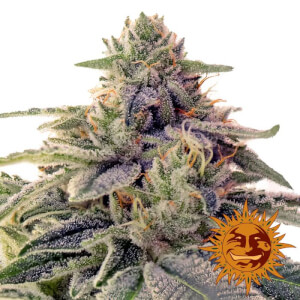
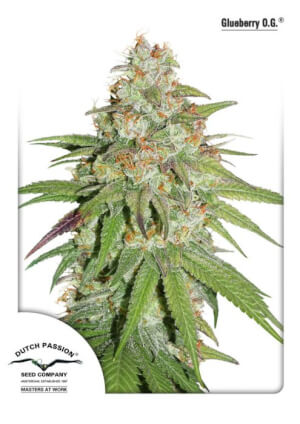
Properly cured, its aroma recalls fresh blueberries, with notes of berries, grape and an earthy base. The purple tones deepen with cool nights, a direct inheritance from the Purple Thai. It does well indoors in a Sea of Green (SOG) setup.
A reliable line for breeding
Part of Blueberry's success as a breeding foundation comes down to its stability. JD Short says his father's lines are among the most reliable true-breeding strains around: take a male from a pack, put it on your favorite female and you end up with fairly stable crosses.
According to JD, there's a particular smell that gives away the whole family, a floral, berry, earthy and hashy blend. He says he's been smelling it since he was in diapers, so it's hard for him to miss it in its descendants.
The Blueberry family
The best-known descendant is Blue Dream, a cross of Blueberry and Haze associated with Santa Cruz, California. It started as a hard-to-find clone and became a dispensary staple on the West Coast. Today, practically every established seed bank offers a seed version.
It's not clear which Blueberry or which Haze gave rise to Blue Dream. Jason Matthys, founder of Equilibrium Genetics, told High Times he knew old-timers who drove down to Santa Cruz in the 1970s to get a blueberry similar to DJ Short's, but not his.
The family is large. It includes Blue Cheese, Blue Headband, Berry Bomb, Blueberry Kush and Blue Diesel, which crosses Blueberry with NYC Diesel. On the European side, there are Blue Widow and Blue Venom, which combine Blueberry with White Widow.
Among more recent crosses, Blueberry Muffin stands out for its sweet, bakery-like profile, and it has in turn been used as a parent in strains like Azul Runtz. Other lines from the same root are still available from DJ Short himself, such as Blue Moonshine, Blue Velvet and Flo.
Growing tips
Strains in this family usually have a manageable structure and a short flowering time, which makes them a good fit for indoor spaces. If you're after purple color, slightly cooler nights at the end of flowering help bring it out. Curing is especially important for the berry aroma to come through.
Crosses with Haze, like Blue Dream, stretch more and take longer to flower, so give them more room. Crosses with Kush or Cheese genetics, on the other hand, tend to stay more compact.
Who it makes sense for
The Blueberry family suits growers looking for fruity profiles, deeply colored buds and genetics with history. It also appeals to anyone who wants to breed, thanks to the stability of its lines.
If you prefer something lighter and taller, Blue Dream and other Haze crosses are a good option. If you're drawn to denser, sweeter profiles, Blueberry Muffin or the Kush versions keep the berry aroma that gave the whole family its name.